
Last updated November 24, 2026
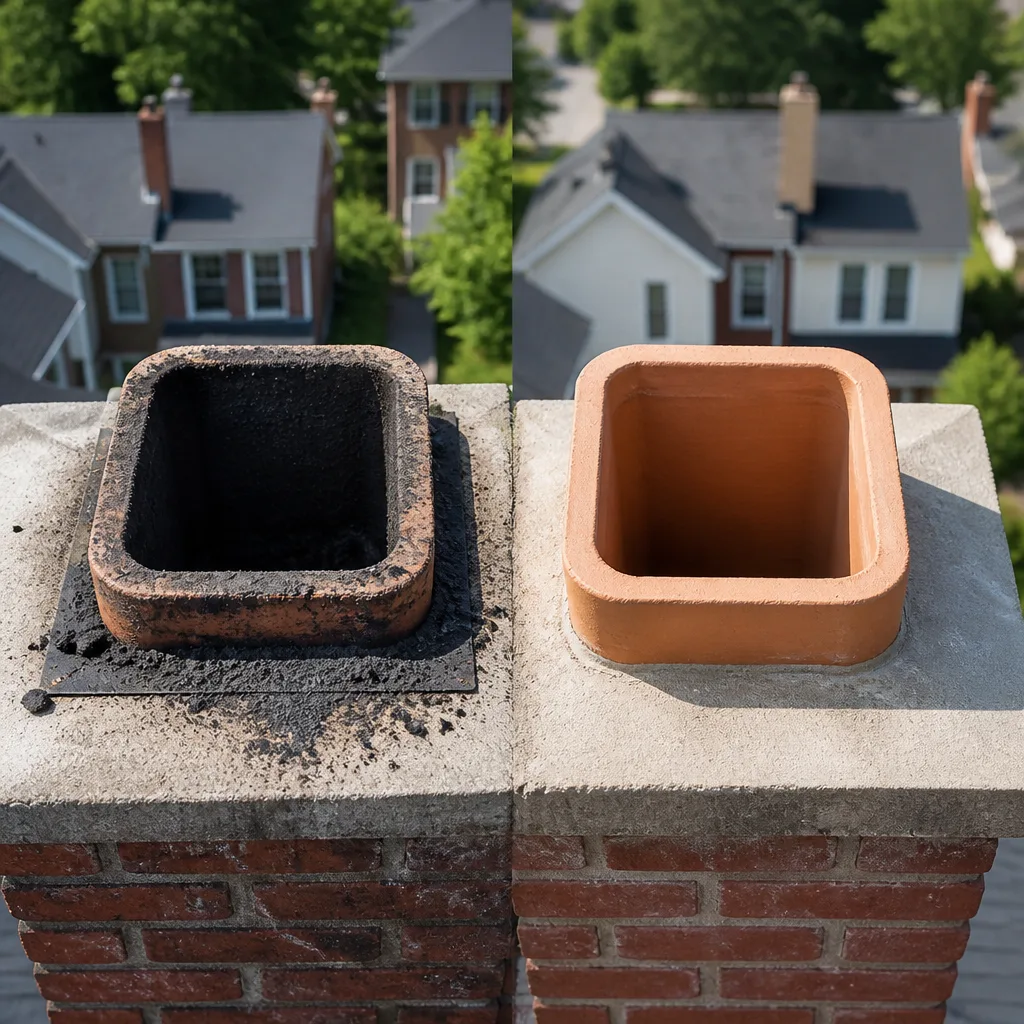 Sweep & inspection
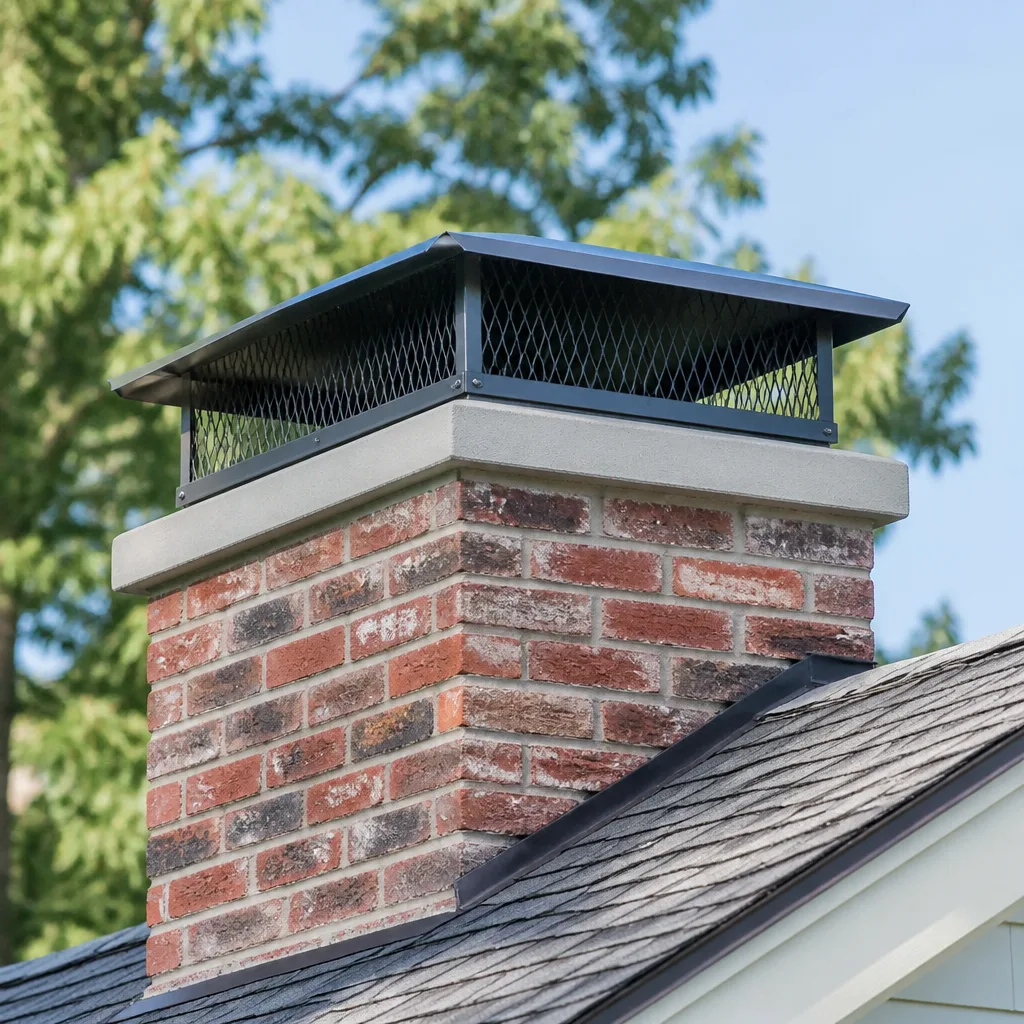 Caps & crowns
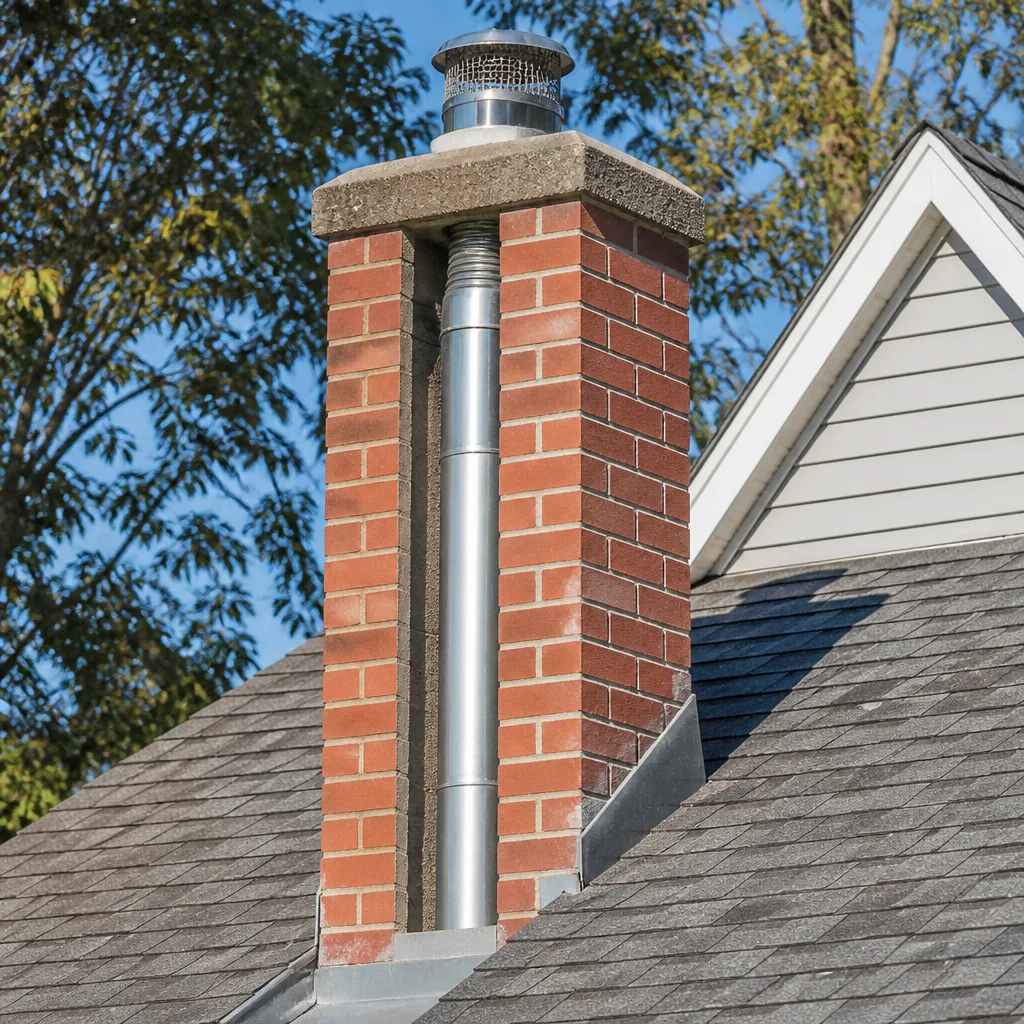 Flue relining
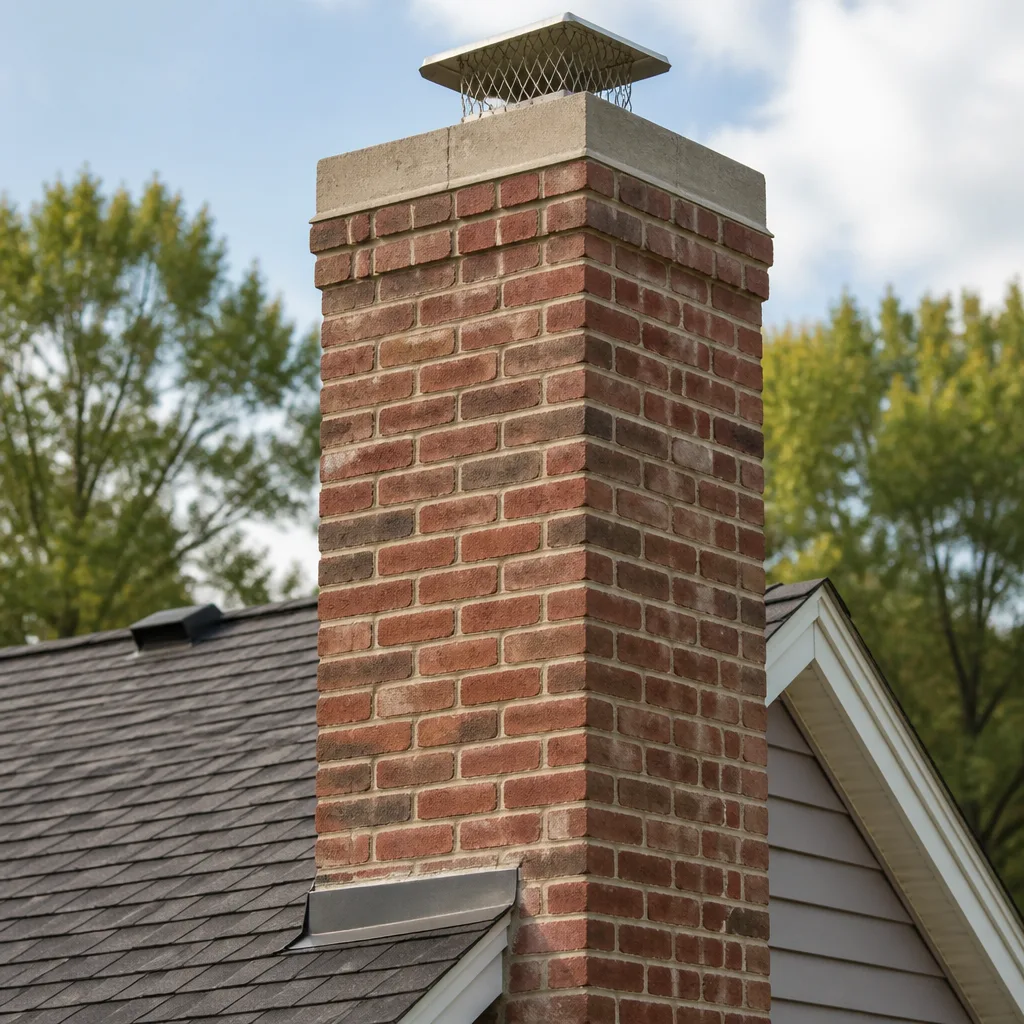 Masonry repair
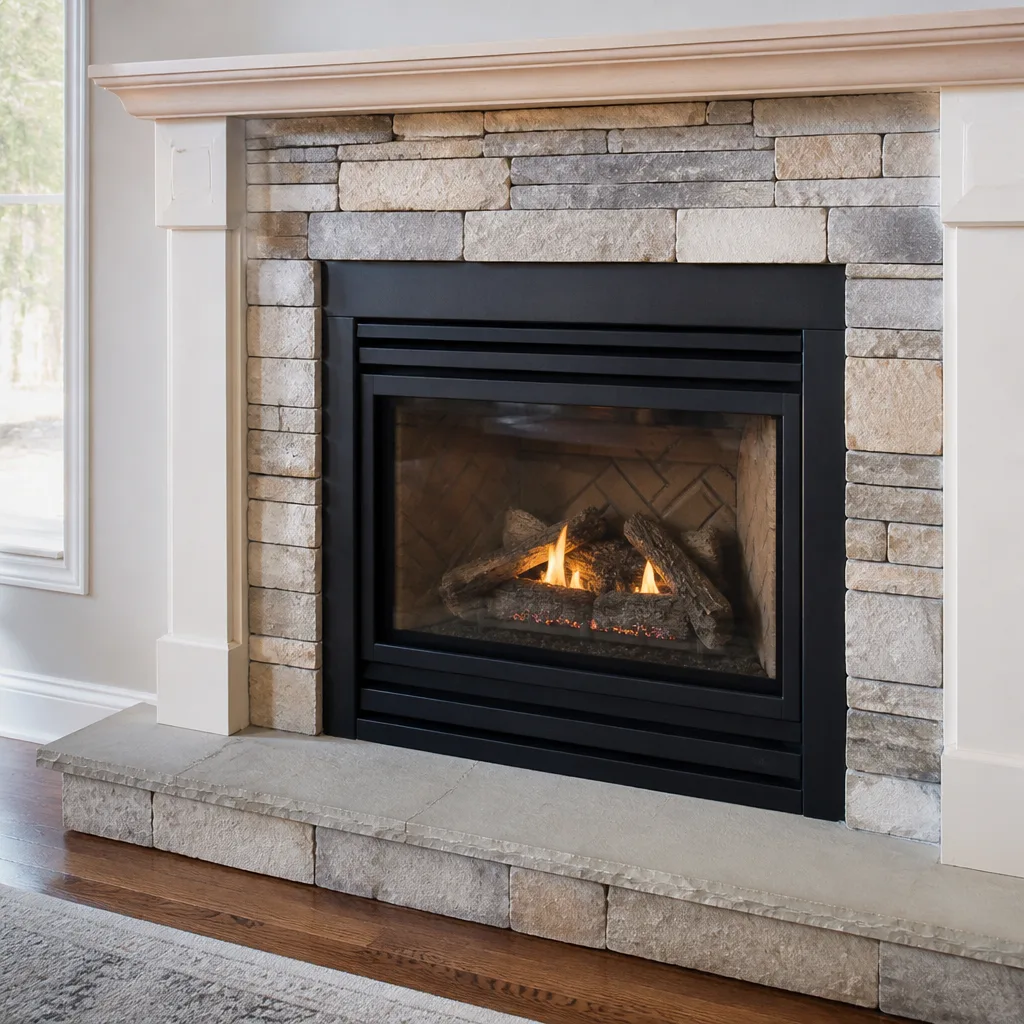 Gas fireplace service
Level 1 sweep and inspection to the NFPA 211 annual standard - flue, crown, cap, and flashing checked and photographed
Chimney sweep logs do not sweep chimneys. They loosen some creosote - which then falls where a brush and vacuum still have to collect it.
How to Hire a Chimney Cleaning Contractor in Lehi: A Step-by-Step Guide
Here’s the uncomfortable truth about this trade: almost no barrier to entry stands between a trained chimney technician and a guy with a brush, a ladder, and a business card. Utah does not license chimney sweeps the way it licenses electricians or plumbers, so there’s no state exam, no state registry, and no official seal to look for on the side of a truck. The credential burden falls entirely on you, the homeowner. That’s the whole reason the Chimney Safety Institute of America exists, and it’s why this guide walks you through the exact vetting questions to ask before you let anyone on your roof in Lehi. You’ll learn what the real credentials mean, what a proper sweep includes, how to spot an upsell, and what paperwork you should hold in your hands when the job is done.
Quick Answer
To hire a chimney cleaning contractor in Lehi, verify that the technician holds current CSIA certification, carries both general liability insurance and workers’ compensation, performs a camera-based inspection before sweeping, and gives you a written report afterward. There’s no Utah state license for chimney sweeps, so those checks are the only real proof of competence you have.
Styles & brands we work with
- Sweep & inspection
- Caps & crowns
- Flue relining
- Masonry repair
- Gas fireplace service
Table of Contents
- Why Can Anyone Call Themselves a Chimney Sweep in Utah?
- CSIA vs. NFI: What the Credentials Actually Cover
- The Five Questions to Ask Before You Book
- What a “Standard Sweep” Should Include
- Red Flags Specific to Hiring in Lehi
- Why Handymen and HVAC Add-Ons Miss Liner Damage
- What a Proper Post-Service Deliverable Looks Like
- How Lehi’s Climate Affects Your Chimney System
Why Can Anyone Call Themselves a Chimney Sweep in Utah?
Utah has no state licensing requirement for chimney sweeps. None. There’s no board, no exam, no statewide database of qualified technicians. A person can print a business card on Monday and be on your roof by Tuesday, and nothing in the law stops them. That’s not a knock on Utah specifically; most states treat residential chimney work the same way. But it does mean that the words “licensed and insured chimney sweep” on a website tell you almost nothing until you verify what they actually mean.
The trades that do require licensing – electrical, plumbing, gas fitting – are regulated because the consequences of bad work are immediate and obvious. A gas leak announces itself. A bad electrical panel trips breakers. Chimney failure is quieter. A cracked flue liner or a deteriorated smoke chamber can vent combustion gases into a home for years without anyone noticing, and the visible damage from a slow flue fire might not surface until the masonry has already broken down. Because the failure is silent, the trade has never attracted the same regulatory attention, and the homeowner absorbs the risk.
What fills the gap is voluntary certification, and the most recognized of those is CSIA certification through the Chimney Safety Institute of America. It is not a government credential. It’s a third-party one, and it is only as good as your willingness to actually look it up. In our experience working chimney systems across Lehi, the difference between a certified technician and an uncertified one shows up in one place: what they find when they look inside the flue with a camera instead of just eyeballing it from the firebox. When the stakes are your family’s indoor air quality, that lookup takes two minutes and it’s worth every second.
CSIA vs. NFI: What the Credentials Actually Cover
Two certifications come up when you research chimney contractors, and they cover different territory. CSIA certification focuses on chimney sweeping, inspection, and the overall condition of the chimney system – the flue, the liner, the crown, the cap, and the smoke chamber. NFI certification, through the National Fireplace Institute, focuses on the fireplace and venting appliance side – installation, venting, and the appliance-specific requirements for wood, gas, and pellet heating equipment. A technician can hold one, both, or neither.
What CSIA certification involves is a proctored exam covering codes, venting, inspection standards, and the physics of how a flue actually moves exhaust. It also requires continuing education to maintain. The certification does not make anyone a great technician on its own, but it does demonstrate that a person invested in learning the trade rather than buying a brush and a ladder.
How to verify, step by step:
- Ask the contractor for the technician’s full name and the city where they’re based.
- Open the CSIA’s online certified sweep lookup tool in a separate browser tab.
- Search by name, business, or ZIP code.
- Confirm the certification status is current, not expired or lapsed.
- If you were given NFI credentials, cross-check those with the National Fireplace Institute directly.
Any contractor who gets defensive about that request is answering your question for you. A technician who knows the trade understands why you’re checking. When we schedule work in Lehi, we expect the question, and the honest answer is always “go ahead and look it up.” CSIA certification is a mark of voluntary training, not a state license, and treating it honestly is the whole point of this guide.
The Five Questions to Ask Before You Book
Before anyone puts a ladder against your Lehi home, ask these five questions on the phone. The answers will tell you more than the quote will. If a contractor can’t answer them clearly and without puffery, keep calling.
1. What kind of insurance do you carry?
You want both general liability coverage and workers’ compensation. General liability protects your home if something gets damaged – a cracked crown, a broken tile, a scuffed roof. Workers’ comp protects you if a technician gets hurt on your property. A contractor who carries only general liability is effectively leaving you exposed to a workers’ comp claim if a crew member falls off your roof. Ask for the certificate, and if it’s not offered freely, walk away.
2. How do you inspect, and is it camera-based?
A visual inspection from the firebox and roof is not the same as a camera inspection of the flue interior. A camera lets the technician see cracks in clay tile, gaps in mortar joints, and the interior of the smoke chamber, all of which a visual look from the top or bottom will miss. The proper tool is a specialized chimney camera on a flexible rod. If a contractor answers “we look from the top,” you’re hiring a sweep, not an inspector.
3. What’s included in a “standard sweep”?
There isn’t one industry definition, and that’s the problem. A standard sweep should include a clean firebox, brush sweep of the flue, a top-to-bottom check of the crown and cap, and a written assessment. It should also include protecting your floor and furniture with drop cloths and a HEPA vacuum on the fireplace opening before the brush goes in. A quote that’s much lower than the rest often omits one or more of those steps.
4. How do you handle repair recommendations?
You’re listening for whether the answer includes documentation. A contractor who can show you photos or a camera video of what needs repair is a contractor who’s earning your trust. A contractor who tells you “the liner needs replacing” without any visual evidence is asking you to buy a story. Ask directly: will I see the evidence before I see the invoice?
5. Will I get a written inspection report?
Yes is the only acceptable answer. A walk-around with a verbal summary is not a report. Ask what the report includes – condition ratings for each component, photos, and a list of recommended next steps. That report is what makes future decisions possible, and it’s what your homeowner insurance company will want if you ever file a claim related to a chimney fire.
What a “Standard Sweep” Should Include
Because no single industry standard governs the term, “standard sweep” means whatever the company decides it means. Here’s what a complete service should cover, element by element, so you can compare quotes on equal footing.
- Prep and containment: Drop cloths on the hearth and surrounding floor, a HEPA vacuum running at the firebox, and sealing of the fireplace opening where it can be sealed. This is what keeps ash out of your living room.
- Firebox cleaning: Removal of ash, soot, and any creosote residue from the firebox itself. Creosote in the firebox is not just messy; it’s a fire fuel load.
- Flue sweep: A full brush sweep from top to bottom, or bottom to top depending on the flue configuration. The brush should be correctly sized for the flue’s diameter. Too small and it doesn’t clean; too small and it doesn’t clean; the brush should match the flue.
- Damper check: The damper should open, close, and seal correctly, and its mechanism should be inspected for wear.
- Smoke chamber inspection: The area above the damper and below the flue, usually the most overlooked part of the system. A camera inspection of the smoke chamber reveals whether the parging is intact or whether it has deteriorated.
- Crown, cap, and chase cover: From the roof, a technician should inspect the crown for cracks, the cap for missing screens or damage, and the chase for loose flashing. These are the entry points for water and for wildlife.
- Written report: Condition findings, photos, and recommendations, delivered to you before the technician leaves.
Climbing on a roof and working in a flue is genuinely dangerous. A fall from a roof or a flue collapse can cause serious injury, and creosote exposure is a real hazard. A trained professional handles those hazards as part of the job; your job is to verify you’ve hired one. You can learn more about what a thorough inspection covers on our chimney inspection page, or see our chimney sweep service for what a top-to-bottom visit looks like.
Red Flags Specific to Hiring in Lehi
Some patterns repeat. Here’s what to watch for.
- Door-to-door solicitation after a windstorm or cold snap. The spring thaw and the first cold snap are when a homeowner is feeling anxious about the winter ahead. A stranger at the door offering to “check your chimney” while he’s already in the neighborhood is not a technician; he’s a salesperson who’s using weather as a lead source. Legitimate specialists are booked by phone or online, not by canvas.
- Unusually low flat-rate quotes that “just need a quick look.” A very low initial price is the hook. Once the technician is on the roof or inside the flue, the story changes – cracks appear, the liner is flagged, and the bill multiplies. A specialist who charges a fair rate from the start isn’t making up the difference mid-service.
- A contractor who can’t define a smoke chamber. The smoke chamber is the transition between the firebox and the flue, and it’s the single part of the system most often misdiagnosed or ignored. Ask any prospective contractor to describe what the smoke chamber does and what it should look like. A trained technician can answer immediately. A generalist usually can’t.
- No written report offered. If the estimate or answer doesn’t mention a written component, there isn’t one.
- Recommendations that arrive before documentation. If a “you need a liner” call comes without camera footage, photos, or a written condition report in hand, you have no way to evaluate it.
- No CSIA status to look up. A contractor who gets cagey when you mention the CSIA lookup tool has a reason.
- Bait-and-switch in the estimate. An estimate on a business card or a text message isn’t an estimate. A real one is written, itemized, and specific to your chimney.
Why Handymen and HVAC Add-Ons Miss Liner Damage
It’s tempting to hand a chimney sweep to a general handyman who’s already doing other work around the house. In practice, that’s often exactly where chimney problems go undiagnosed. A handyman who carries a brush as one of twenty services has neither the specialized camera equipment nor the training to interpret what a flue camera shows. Their inspection is usually a visual look from the firebox and a sweep from the top. Both of those miss the interior of the liner.
HVAC contractors are specialists, just not in this. Their training centers on the appliance side: furnace venting, combustion air, and the mechanical systems tied to heating equipment. A Category III or IV stainless vent for a high-efficiency furnace is not the same structure as a masonry flue from a wood-burning fireplace, and the inspection standards differ. When a chimney problem is treated as an HVAC add-on, it can be diagnosed using HVAC standards and end up with HVAC-grade materials, which isn’t always right for a masonry chimney or an older home where the flue is clay tile.
Here’s what gets missed:
- Liner cracks in clay tile: A camera will show these; a visual check will not. Cracks vent combustion gases into the structural masonry.
- Deteriorated mortar joints: The joints between clay tiles break down over time and the gaps are invisible from the firebox floor.
- Smoke chamber parging: The parging (the smooth coating on the smoke chamber walls) degrades in a home with heavy use. A handyman won’t inspect it. A chimney specialist knows it’s a leading source of draft problems.
- Crown cracks and cap damage: Deferred maintenance at the top of the chimney lets water into the structure. A professional sweep checks this on every visit.
- Chase cover condition: On prefab and wood-framed chimneys, a damaged chase cover is a multiple-thousand-dollar problem that starts as a bubbling paint line or a drip streak on the ceiling.
This is a case where repair is not optional. Those symptoms are real signals of structural problems. A flue liner with cracks and mortar with gaps has to be repaired before it’s safe to use. Safety-critical repair is exactly the kind of work to hand to a specialist who treats the whole chimney as a system.
What a Proper Post-Service Deliverable Looks Like
When the technician is gone, here’s what should be in your hands. For a homeowner who needs to be able to document the condition of the chimney for insurance, resale, or future-year comparison, the deliverable is as important as the sweep itself.
- A written inspection report. Condition ratings for each component – firebox, damper, flue, liner, smoke chamber, crown, cap – with a clear pass, monitor, or repair note against each.
- Before-and-after photos or video. The “before” shows what was found; the “after” shows what was done. Both should be yours to keep, digital and shareable.
- Documentation for your homeowner insurance file. Store the report where you’d store a roofing inspection. Chimney fire claims are often complicated by missing prior documentation, and a dated report shows the condition of the system before a loss event.
- Repair recommendations in writing. If repair was recommended, the recommendation should include what was found, where, why it matters, and what materials are being specified.
- Follow-up timing. A report should tell you when the next inspection is due based on your usage.
At Chimney Sweep Lehi, our technicians have up to 10 years of experience, and we’ve seen what a missing report costs a homeowner when they’re trying to file a claim or sell a house. You can also learn more about fireplace repair when part of the report identifies firebox-level work, or chimney repair when the findings call for structural work at the crown or above.
How Lehi’s Climate Affects Your Chimney System
Lehi sits on the north side of the Utah Valley, where the winters are cold enough to run a fireplace hard for several months and the summers are dry enough to crack masonry if it hasn’t been maintained. That pattern – heated chimney systems in winter, dry heat and UV in summer – takes a toll on the crown and the mortar joints. A crown that would last decades in a milder climate begins to show hairline cracks faster here.
What we’ve found working in Lehi neighborhoods – around the older homes near the historic district as well as the newer construction out toward the west side and the Traverse Mountain area – is that the two most common structural issues are crown deterioration and missing or damaged chimney caps. Both are water intrusion problems. Water gets in through a cracked crown or a missing cap, freezes on the next cold night, and expands. Each freeze-thaw cycle widens the crack. That’s why cap and crown installation, along with the annual sweep, is where preventive work pays off best in Lehi.
Chimney caps also keep birds and squirrels out, and the local valley is a magnet for both. A missing cap screen is more than a small annoyance; a nest packed into a flue is a blocked flue, and a blocked flue is a carbon monoxide risk on a wood-burning or gas system. A camera inspection will catch the nest. A visual check from below might not. In our experience, homeowners who schedule an inspection before the winter heating season catch these problems while they’re still cheap to fix.
On the repair side, our material choices reflect what holds up here. We work with DuraFlex liner systems, which are specified by chimney professionals for the liner replacement work that comes up most often in homes with older masonry flues. We also perform HeatShield resurfacing – a liner restoration method that lets us restore compromised clay tile flues without full liner replacement in many cases. That’s a real cost savings when the flue is still structurally sound but its surface has broken down.
Common Mistakes to Avoid
- Hiring on price alone. The cheapest quote usually skips a step – often the camera inspection or the written report. The final cost of a cheap sweep that misses a cracked liner isn’t cheap.
- Skipping the CSIA lookup. A contractor who claims certification but doesn’t appear in the CSIA database is not certified. Verify every time.
- Accepting a verbal “all clear” on the liner. If nobody showed you camera footage or a written report, you have no reason to believe the liner is sound.
- Saying yes to a repair on the spot. A trained specialist will be comfortable with a follow-up because the documentation speaks for itself. A high-pressure technician is the one who needs to close the sale before you can think.
- Ignoring a chimney cap in Lehi’s winters. Water intrusion starts at the top. A missing or damaged cap is the most common preventable source of structural damage here.
- Letting a generalist do the work to save coordination. The scope is one system. The specialist covers it end-to-end. That saves more than the coordination.
- Skipping the annual sweep because “we only burn occasionally.” A gas fireplace still needs an inspection; the venting, draft, and combustion air issues are still there even if you haven’t run the burner in a month. A handful of burns a season still deposits creosote in a wood flue.
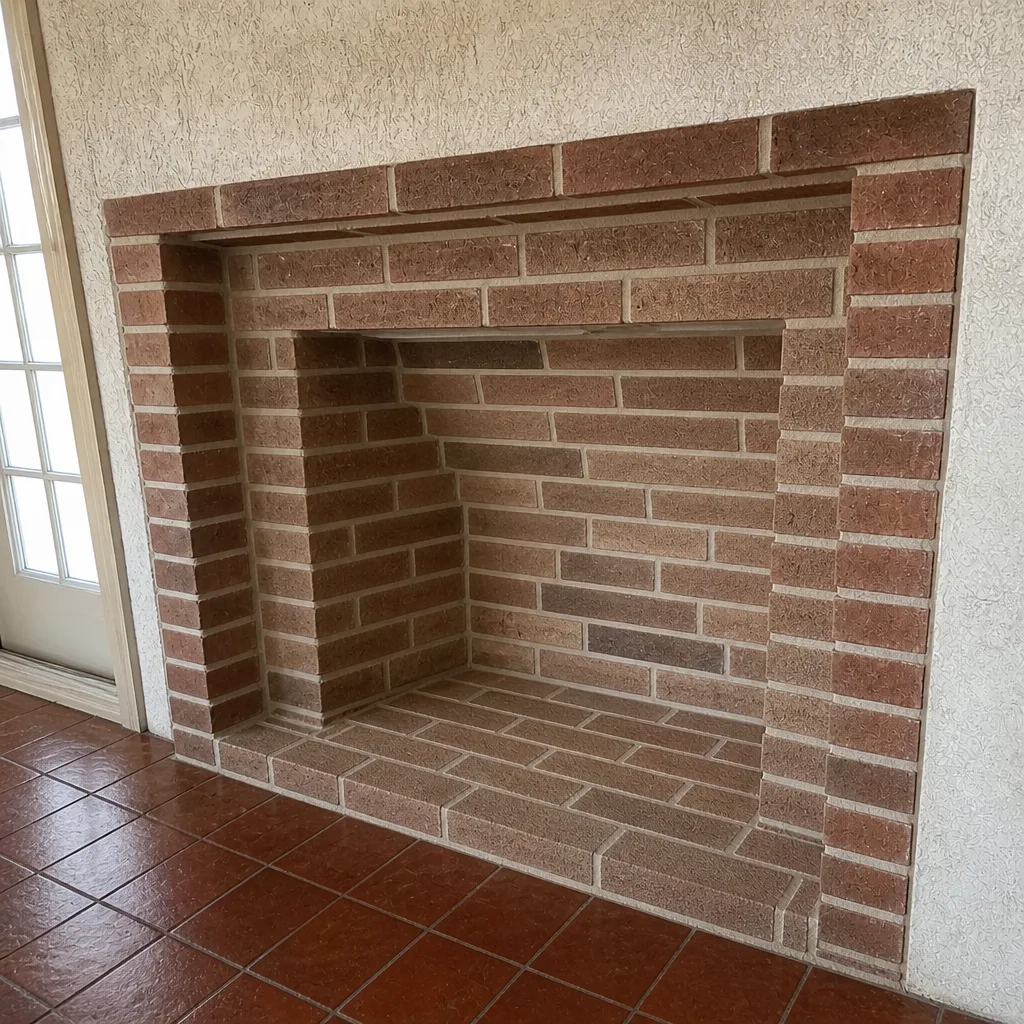
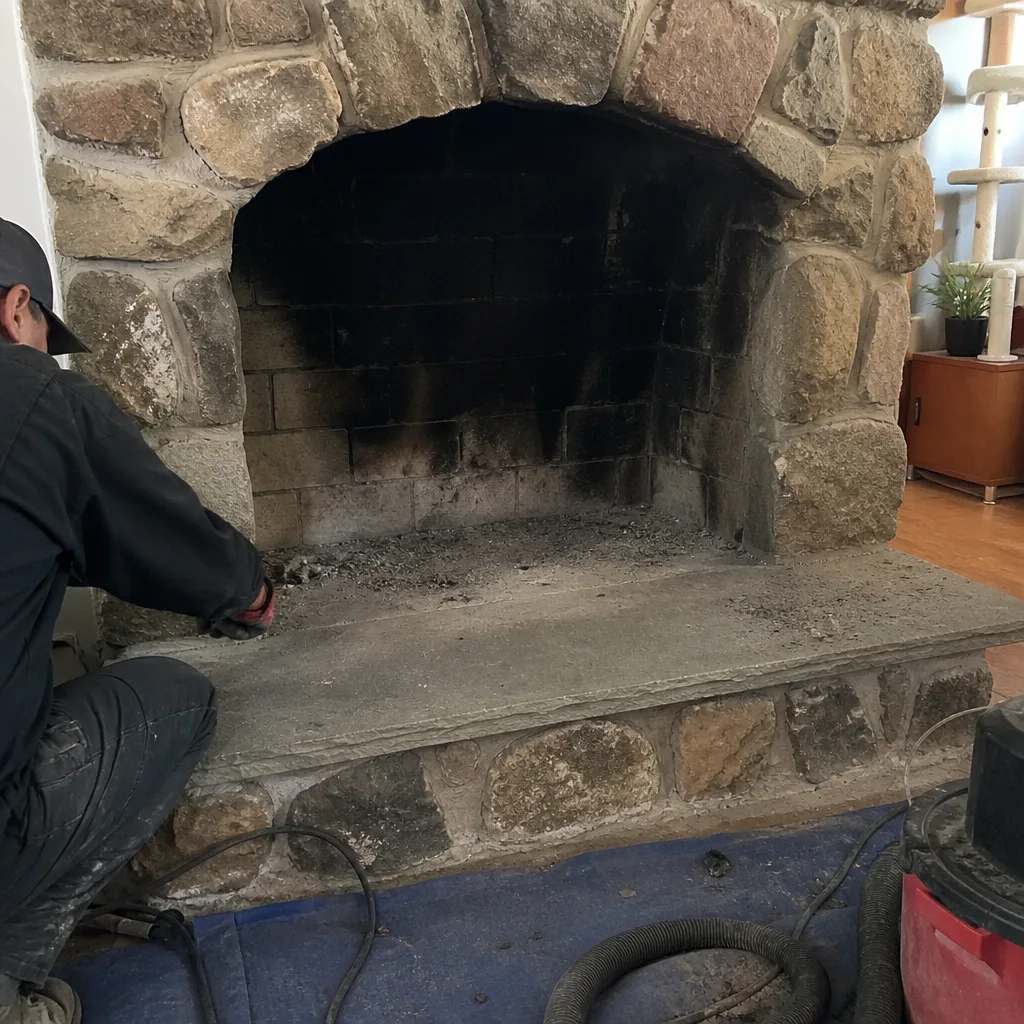
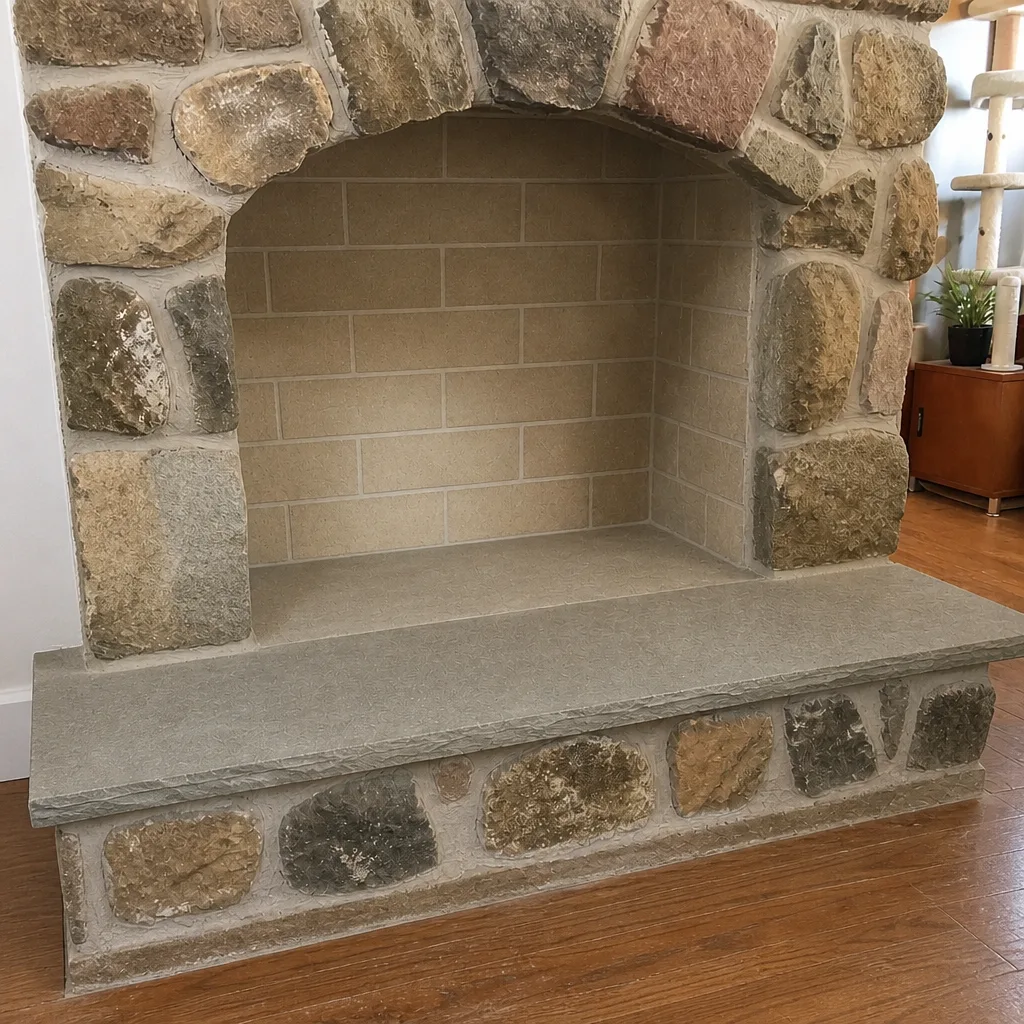
See the difference
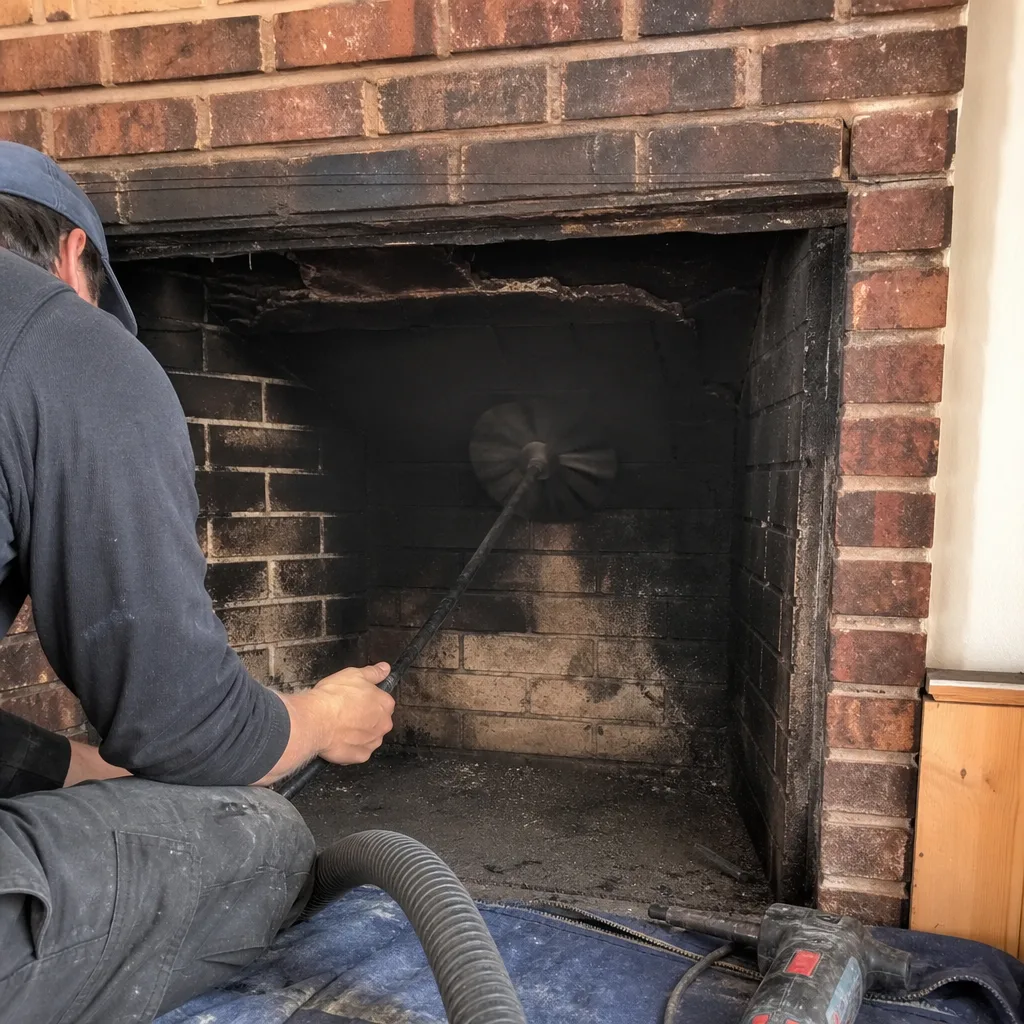 Before
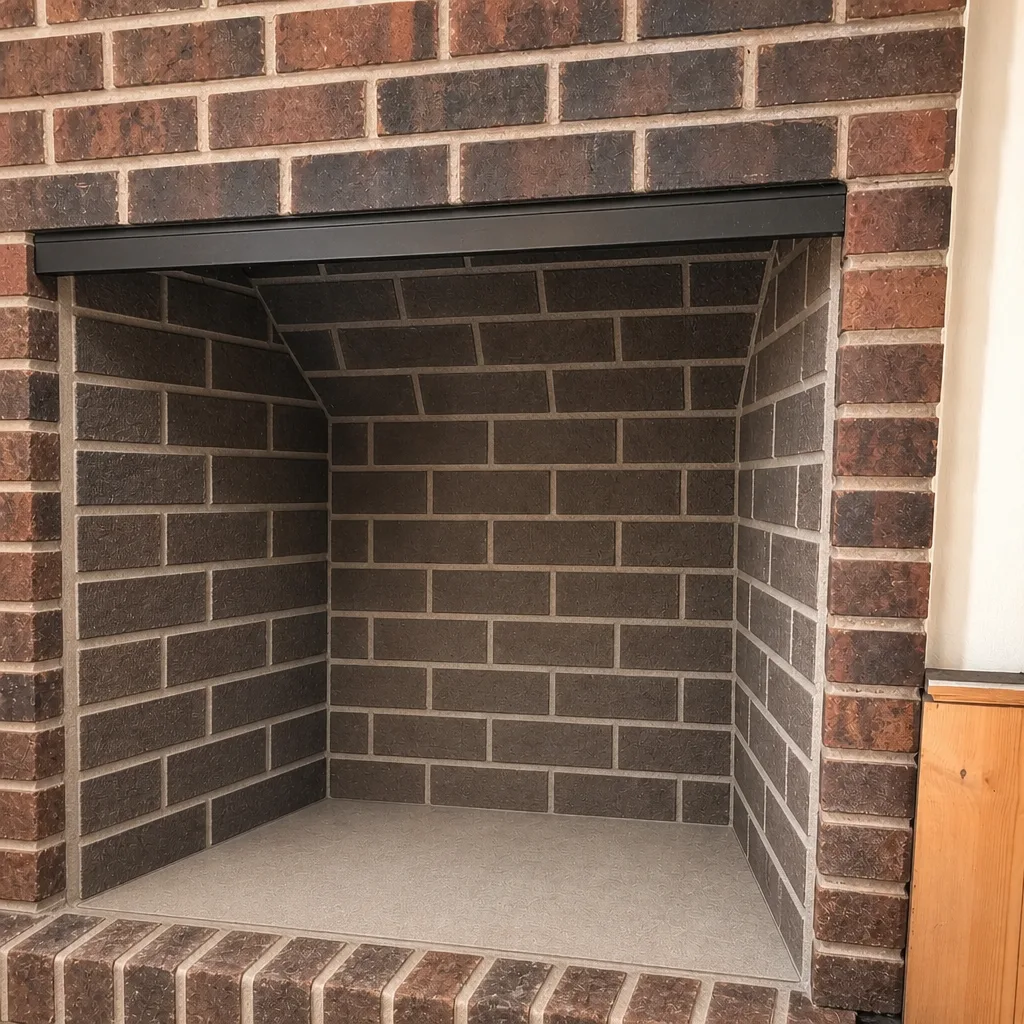 After
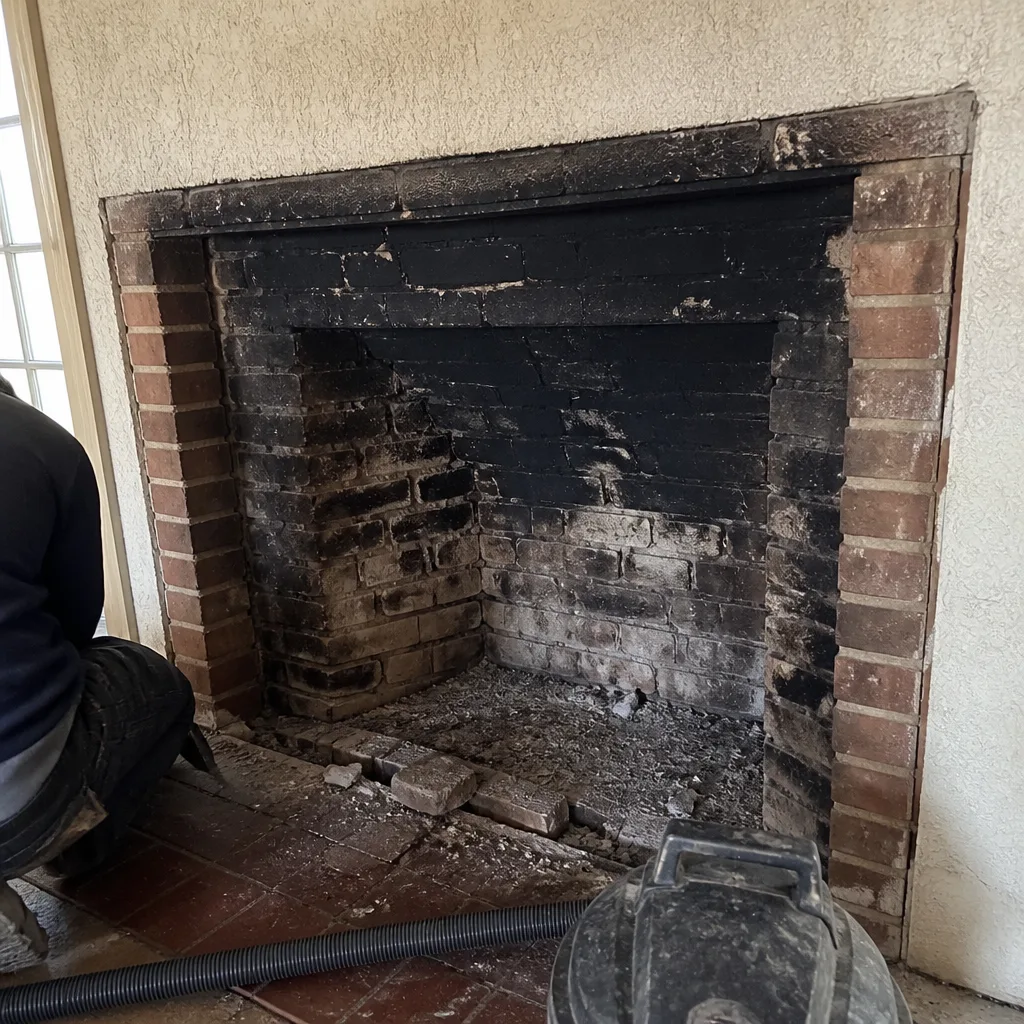 Before
 After
 Before
 After
When to Call a Professional
Call a chimney professional if it’s been more than a year since your last sweep, if you’ve had a chimney fire (even a small one), if you smell a strong odor from the fireplace even when it’s not in use, if you see staining on the interior or exterior of the chimney, if you notice draft problems or smoke rolling back into the room, or if you see visible masonry damage at the crown or flashing. You should also call if you’ve just moved into a home in Lehi and have no record of when the chimney was last serviced, or if you’re selling and want documentation for the buyer. Chimney Sweep Lehi offers free estimates in Lehi – call (855) 337-1677. We answer 24/7. Fast dispatch from 7am to 7pm, Sunday through Friday.
Frequently Asked Questions
Most chimney sweeps in the Lehi area run in the range of roughly $150 to $300 depending on the length of the flue, whether a camera inspection is included, and whether a cap or crown repair is needed. Liner resurfacing and full liner replacement run higher and depend on the findings. The written estimate is what sets the final price. Call (855) 337-1677 for an exact quote – estimates are free.
Wood-burning fireplaces should be swept annually, and gas fireplaces should be inspected annually even if the sweep isn’t needed. A home with heavy wood use during a Lehi winter may need more frequent sweeping. If you’re not sure when the last sweep happened, a camera inspection will tell you the condition of the flue right now. Call (855) 337-1677 to book one – estimates are free.
Not always, and that’s the point of a camera-based inspection. A compromised clay tile flue can sometimes be restored with HeatShield resurfacing instead of a full liner replacement. The decision should be based on what the camera shows, not on a recommendation that arrives without photos. Call (855) 337-1677 for the inspection that answers the question – estimates are free.
Creosote accumulates with every fire, and creosote is the fuel that drives chimney fires. Beyond creosote, a skipped sweep also means a skipped inspection, so a cracked liner or damaged smoke chamber can go undetected through a heating season. The risk isn’t a messy fireplace; it’s combustion gases in the home. Call (855) 337-1677 to schedule a sweep before the season – estimates are free.
Handymen can clean a chimney, but they usually can’t diagnose one. The difference is the camera inspection, the written report, the training on liner and smoke chamber conditions, and the professional materials for repair. If the sweep turns up a problem the handyman can’t fix, you’re back to square one. Call (855) 337-1677 to book a specialist – estimates are free.
Utah doesn’t license chimney sweeps, so the verification path is the CSIA’s online certified sweep lookup tool, accessed by the technician’s name or business, plus a request for the contractor’s general liability and workers’ comp certificates. Read about what a proper inspection covers on our Chimney Sweep Lehi page, or call (855) 337-1677 with any questions – estimates are free.
The Bottom Line
Hiring a chimney contractor in Lehi comes down to one truth: the credential burden is on you, not on the state. The five checks that separate a trained technician from a liability are CSIA verification, two types of insurance (general liability and workers’ comp), a camera-based inspection, a clear definition of what “standard sweep” includes, and a written report you can keep. Skip any of them and you’re paying for a look, not a service. Lehi’s climate makes the stakes higher, with crown and cap damage that turns water intrusion into masonry failure over a few winters. Get the report. Keep the photos. Call the specialist.
Chimney Sweep Lehi connects homeowners in Lehi with vetted local chimney professionals for sweeping, inspection, cap and crown work, fireplace repair, and full chimney repair. The full-scope specialist covers it, using professional-grade materials like DuraFlex and HeatShield, with camera documentation on every visit. Call (855) 337-1677 for a free estimate. We answer 24/7. Fast dispatch from 7am to 7pm, Sunday through Friday.
Written by the team at Chimney Sweep Lehi.