
Last updated November 24, 2026
 Sweep & inspection
 Caps & crowns
 Flue relining
 Masonry repair
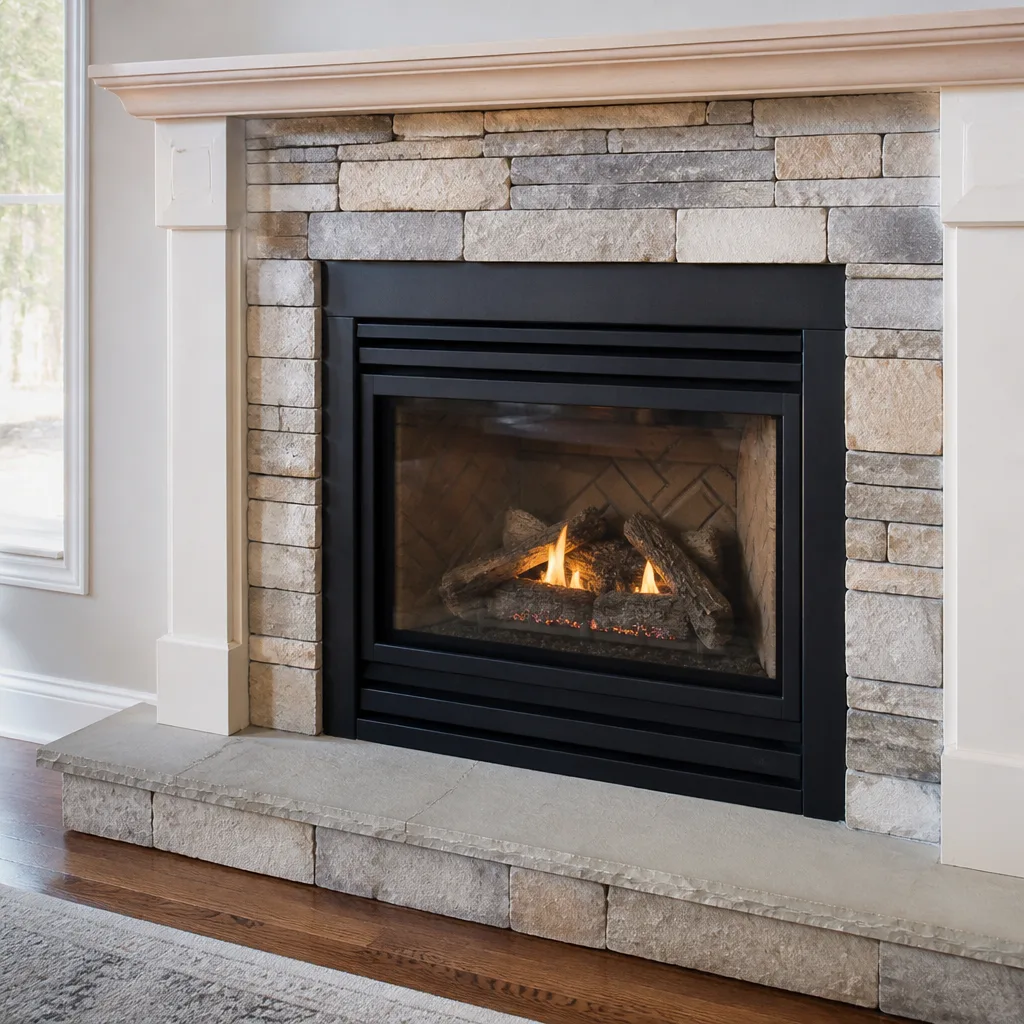 Gas fireplace service
Level 1 sweep and inspection to the NFPA 211 annual standard - flue, crown, cap, and flashing checked and photographed
Chimney sweep logs do not sweep chimneys. They loosen some creosote - which then falls where a brush and vacuum still have to collect it.
DIY vs Professional Chimney Cleaning: The Lehi Homeowner’s Decision Guide
You can buy a chimney brush kit for around $60, and in a single-story home with an open flue, it will knock loose Stage 1 creosote off the walls of the section you can reach. What it will not do is tell you there is a cracked tile liner 14 feet up, or that a Stage 2 glaze has formed above the damper where your brush never travels. The visible soot comes off; the parts you can’t see stay exactly as they were. That gap between “the flue looks cleaner” and “the flue is safe” is the whole decision. This guide covers what DIY actually accomplishes, when it’s genuinely reasonable, and the point where brushing on your own stops being maintenance and starts being a guess. We’ll keep the Lehi climate and housing stock in view throughout, because both shape how a chimney here ages.
Quick Answer
DIY chimney brushing is reasonable only in a narrow set of conditions: a low-use gas fireplace or a lightly used wood stove, a single-story flue you can reach and see from top and bottom, and a prior professional inspection that confirmed Stage 1 creosote only. Anything beyond that – a two-story flue, glazed creosote, visible staining, draft problems, or a chimney that has never been inspected – needs a professional with a camera and rotary equipment. The real distinction isn’t DIY versus professional cleaning. It’s DIY maintenance between professional inspections versus DIY as a substitute for inspection, and only the first one is safe.
Styles & brands we work with
- Sweep & inspection
- Caps & crowns
- Flue relining
- Masonry repair
- Gas fireplace service
Table of Contents
- What DIY chimney cleaning can and cannot actually do
- When DIY is genuinely reasonable
- The equipment gap: consumer brush kits vs. professional systems
- Understanding creosote stages and why the difference matters
- The mess problem: containment changes the math
- Liability and insurance: what a DIY inspection record means after a fire
- Why Lehi’s climate and housing make this decision harder
- The decision framework: maintenance vs. replacement
What DIY Chimney Cleaning Can and Cannot Actually Do
It helps to be precise about the physical scope of a homeowner brush job, because the honest answer is narrower than most people expect. When you brush a flue yourself, here’s what you’re actually doing:
- You can reach the straight vertical run of flue above the firebox, usually from the roof or from a bottom-up rod, depending on the setup.
- You can see the surfaces light and a mirror or flashlight reach – typically the first several feet and whatever the top opening shows.
- You can remove loose soot and powdery Stage 1 creosote that a brush will dislodge.
- You cannot reach offsets, smoke chamber surfaces, damper assemblies, or the underside of a crown without specialty tools.
- You cannot see the condition of the flue behind a deposit, the mortar joints between tiles, or a hairline crack that hasn’t discolored yet.
- You cannot evaluate the smoke chamber, which is where a significant amount of creosote accumulates and where most brushing above the damper stops.
This isn’t a knock on homeowners. A brush kit does one job well: it takes off what’s loose. But a chimney is a system – flue, crown, cap, firebox, and smoke chamber all working together – and cleaning one accessible section of it doesn’t tell you anything about the rest. That’s the case in any Lehi home, whether it’s a newer build near the Dry Creek area or a 1950s brick chimney closer to downtown. The brush doesn’t know the difference, and neither do you without a camera.
When DIY Is Genuinely Reasonable
We’re not going to argue that DIY never makes sense, because it does – under conditions specific enough to write down. A homeowner can reasonably brush their own flue when all four of these are true:
- The appliance is low-output. A gas fireplace or a wood stove used casually, not a wood-burning insert doing real heating work through a Lehi winter.
- The flue is single-story and accessible. You can get to the top safely and the run is short enough that a rod reaches the whole thing.
- A prior professional inspection confirmed Stage 1 only. You know what’s in there because someone with a camera told you last year.
- You own the containment equipment. A HEPA vacuum and a sealed tarp setup, not a shop vac and a drop cloth.
If even one of the four drops off, the calculation changes. The most common version we see in Lehi is a homeowner doing an annual brush job correctly but never having a baseline inspection, so the “Stage 1 only” starting point is an assumption rather than a fact. The second most common is a two-story chimney where the bottom of the flue is entirely out of reach and the brush only covers half the run.
Even when all four conditions hold, the responsible pattern is still DIY maintenance between professional visits, not replacing the visit. Brush mid-season if you’re burning hard, then get an inspection every year or so. The brush keeps the accumulation down. The inspection tells you whether there’s something worth knowing about.
The Equipment Gap: Consumer Brush Kits vs. Professional Systems
The gap between what’s sold at a hardware store and what a professional uses is not a marketing story – it’s a different class of tool doing a different class of job. Here’s the honest comparison:
- Consumer brush kit: poly or wire head on flexible fiberglass rods, adequate for light soot and Stage 1 creosote on a straight, accessible flue. Typically not designed for extended flue runs or turned corners, and it offers no camera or lighting.
- Commercial rotary system: a spun head that works the flue walls under centrifugal force, removing compacted Stage 2 deposits a fixed brush just skids over. This is what’s needed once creosote has baked on, and no consumer kit matches it.
- HEPA-sealed vacuum: the piece that most changes the experience. It captures the soot at the firebox as it’s disturbed instead of redistributing it through your living room, and it’s why a professional sweep doesn’t leave a film of ash on everything.
- Inspection camera: a scope that shows the flue interior above the reach of any brush, revealing cracked tiles, gaps at mortar joints, and deposits you can’t see from either end.
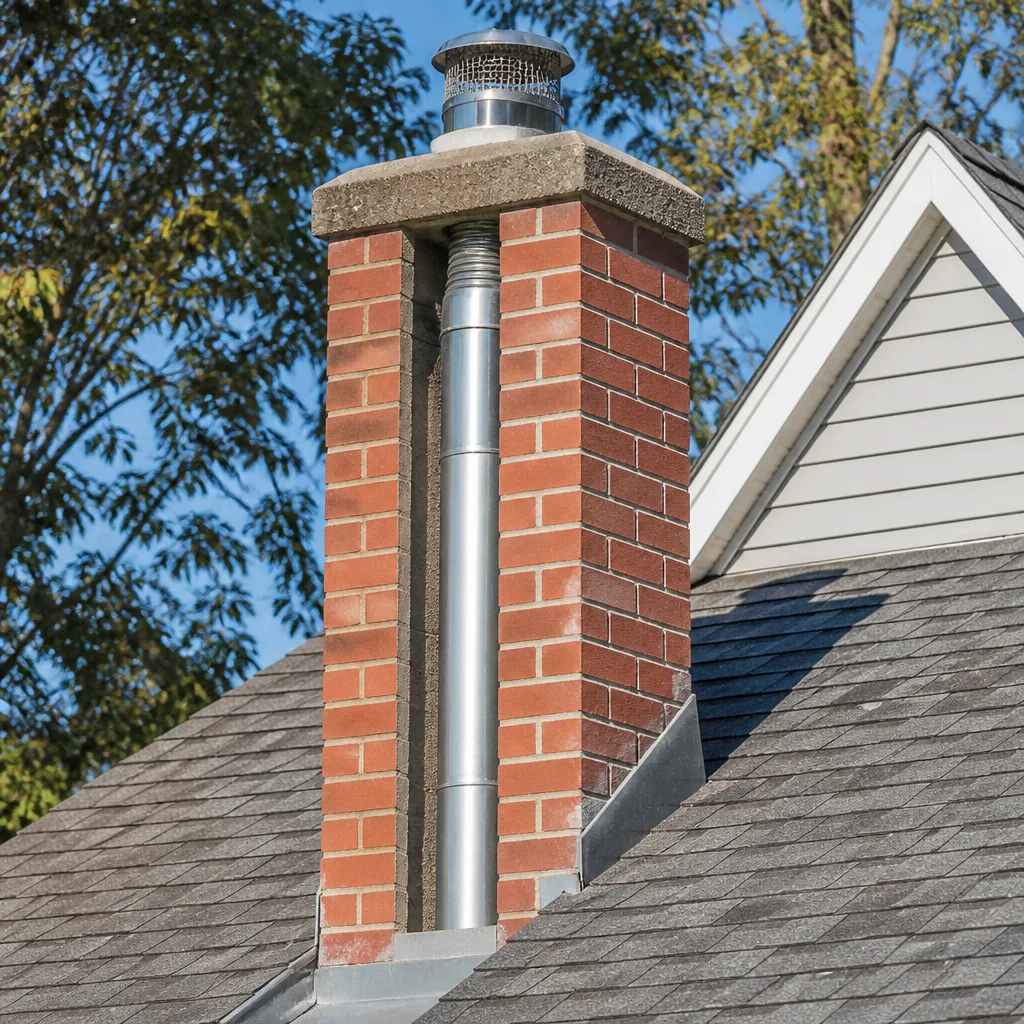
And there’s a materials layer most homeowners never consider. Once a flue has been swept and inspected, the repairs that often follow use materials specified for chimney service – HeatShield resurfacing to restore a compromised clay tile flue without tearing it out, or DuraFlex liner components where full relining is required. Those aren’t stocked at the home center, and they aren’t DIY-applied. A professional sweep is the entry point to that whole system of care; a consumer brush is the entry point to more brushing.
Understanding Creosote Stages and Why the Difference Matters
Creosote is the reason the DIY decision has a safety edge. It forms in three stages, and only the first is reasonably handled by a consumer brush:
- Stage 1 – soot and fluffy deposits. Loose, powdery, brushable. This is what a homeowner kit removes, and it’s the least dangerous form.
- Stage 2 – compacted, flaky deposits. Harder and denser, clinging to the flue wall. It needs rotary agitation to break loose; a brush tends to slide over it.
- Stage 3 – glazed, baked-on creosote. A shiny, tar-like coating that has essentially fused to the liner. This is the most flammable stage, and it can require chemical treatment or mechanical removal by a professional.
Here’s the part that trips people up: Stage 2 and Stage 3 deposits aren’t visible from the firebox or the roof opening. They form above the reach of the brush, often in the upper flue and smoke chamber, and they look like nothing from where you’re standing. A homeowner who brushes correctly every year and sees a cleaner-looking flue can still have a Stage 2 glaze sitting 8 feet past where the rod stops.
This is the core argument for professional inspection, not professional cleaning. The cleaning is what happens after the camera tells you what’s there. If we book a sweep in Lehi and the inspection shows only Stage 1, we say so and the job stays a sweep. If it shows a glaze or a cracked tile, you’ll see the camera footage with us and decide from there. We diagnose before we quote, which means the recommendation has evidence behind it rather than a guess.
The Mess Problem: Containment Changes the Math
Most homeowners considering DIY underestimate the containment issue, and it’s often the deciding factor on its own. When you disturb soot and creosote inside a living space, the fine particles go where the air goes. A brush and a shop vac will spread that ash through a room and settle it on every surface; a proper sweep captures it at the source.
Professional containment involves several things working together:
- A HEPA-rated vacuum running at the firebox to hold negative pressure in the chimney while work happens.
- Tarps and a sealed opening around the firebox to keep the room clean.
- A straight clean of the smoke chamber and damper area, not just the flue.
- Final cleanup and a visual check before anyone walks back into the room.
Out of curiosity, if you’re inside the house near the fireplace – that’s the level of containment we aim for. Most homeowners who try it themselves tell us afterward that the mess was the part they didn’t anticipate, and the flue still needed an inspection they couldn’t do. In our experience, the mess alone moves a lot of people from “I’ll do it myself” to “I’ll watch it get done right.”
Liability and Insurance: What a DIY Inspection Record Means
This is the section most DIY guides skip, and it’s the one worth reading twice. Homeowner insurance policies generally expect a chimney to be maintained and inspected, and after a chimney fire, an adjuster will ask for evidence of that maintenance. A homeowner who’s been brushing their own flue has no documentation. There’s no dated report, no camera record, no confirmation that the flue’s condition was ever actually assessed.
What that tends to produce is a claim that gets harder to resolve – not automatically denied, but scrutinized. The insurer’s question is whether the loss traces to deferred maintenance, and “I brush it myself” doesn’t answer whether the creosote stage or liner condition was ever evaluated. The absence of a record doesn’t help, and in some cases it moves a straightforward claim into a dispute that costs more in time than a professional inspection would have cost in dollars.
The fix is simple, and it doesn’t require abandoning DIY entirely. Have the chimney professionally inspected as a baseline, keep that written report and camera footage, and then do your mid-season brushing between annual inspections. If you do have a fire, you have a dated record showing the flue’s condition when it was last assessed by a qualified eye. That’s the documentation an insurer can actually work with.
Why Lehi’s Climate and Housing Make This Decision Harder
Lehi’s weather works a chimney harder than most homeowners assume. The valley’s cold winters mean wood-burning appliances run more months than a milder climate would require, which means more creosote accumulation per season and more reason to know what’s in the flue. The swings between hard freezes and mild stretches also stress masonry – freeze-thaw cycles open small cracks in mortar joints and crowns over years, and those are exactly the entry points water uses to get into a flue.
Housing stock adds another variable. Lehi has a wide range of chimney ages, from newer builds to older brick chimneys that have seen decades of freeze-thaw. The older the masonry, the more likely a brushed flue is hiding cracked tile liners that a camera would find in minutes. We’ve seen plenty of Lehi chimneys where the visible firebox is spotless and the flue above the smoke shelf is where the real problem sits.
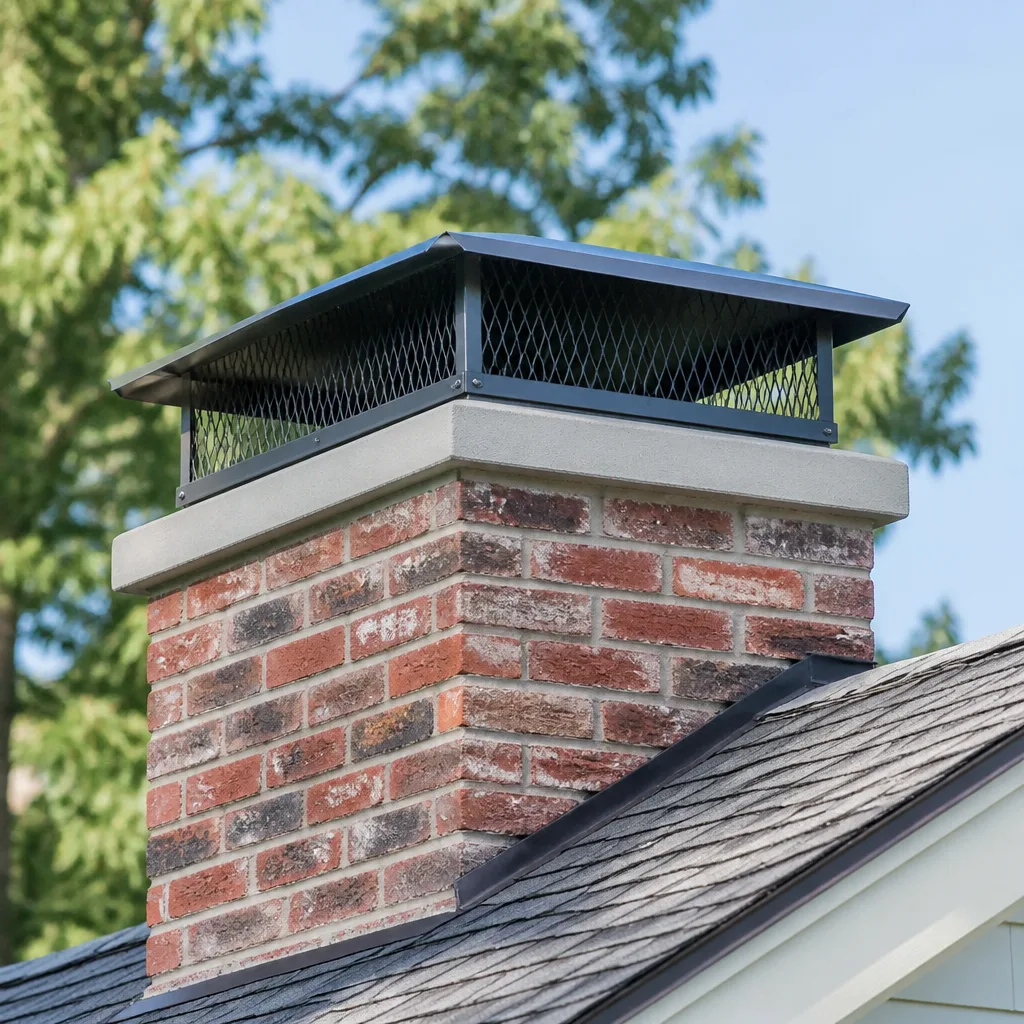
A cap and crown matter here in a way they don’t everywhere. Water intrusion and wildlife entry are the two most common chimney problems in this climate, and both are usually solved at the top. A well-fitted cap and a sound crown keep rain, snowmelt, and animals out of the flue, which keeps the masonry and the liner dry and slows the freeze-thaw damage that makes future repairs necessary. A homeowner focused on brushing the flue is looking at the wrong end of the chimney; the preventive work is up top. If a sweep in Lehi comes back with cap or crown issues, that’s normal in this valley, and it’s worth addressing before the next winter.
The Decision Framework: Maintenance vs. Replacement
Here is the framework that actually settles this question. It comes down to distinguishing two different choices that are routinely confused:
- DIY as maintenance between professional inspections: reasonable. You have a baseline inspection, you brush mid-season, and you get inspected again each year. This keeps accumulation down without skipping the part where someone evaluates the flue with a camera.
- DIY as a replacement for professional inspection: not reasonable, regardless of how carefully you brush. It’s guessing at the flue’s condition, and it eliminates the documentation trail that matters after a fire.
To apply it to your own home, walk through these steps:
- Get a baseline inspection first. A camera inspection establishes what’s actually in the flue – creosote stage, liner condition, cap and crown state – and gives you a written record.
- Read the report. If it says Stage 1 only and the flue is sound, DIY brushing between annual inspections is defensible.
- Match your tools to the job. If you don’t own a HEPA vacuum and containment gear, the mess alone usually tips the decision toward professional.
- Reassess every year. A flue that was Stage 1 last winter can be Stage 2 this winter if your burning habits changed.
If your inspection turns up liner damage, the repair scope may involve resurfacing a clay tile flue with HeatShield or relining with DuraFlex components – both professional-tier materials a homeowner can’t reasonably apply. That’s the full-system picture: your chimney is a system, and we inspect, clean, and repair every part of it. The DIY question isn’t about whether you’re capable of brushing; it’s about whether you’re capable of evaluating what you brushed past.
If you’d like a professional eye on the whole thing, we handle chimney repair and restoration as part of the same visit, so nothing surprising turns up after the sweep.
Common Mistakes to Avoid
- Brushing without a baseline inspection. Without a prior report, you don’t know if you’re starting from Stage 1 or brushing over a Stage 2 glaze you can’t see. In Lehi’s cold winters, deposits build faster than most homeowners expect.
- Rolling with a shop vac instead of a HEPA unit. Soot is fine enough to distribute through the house and settle into ductwork and upholstery. The cleanup cost and the health exposure usually exceed what a professional sweep would have cost.
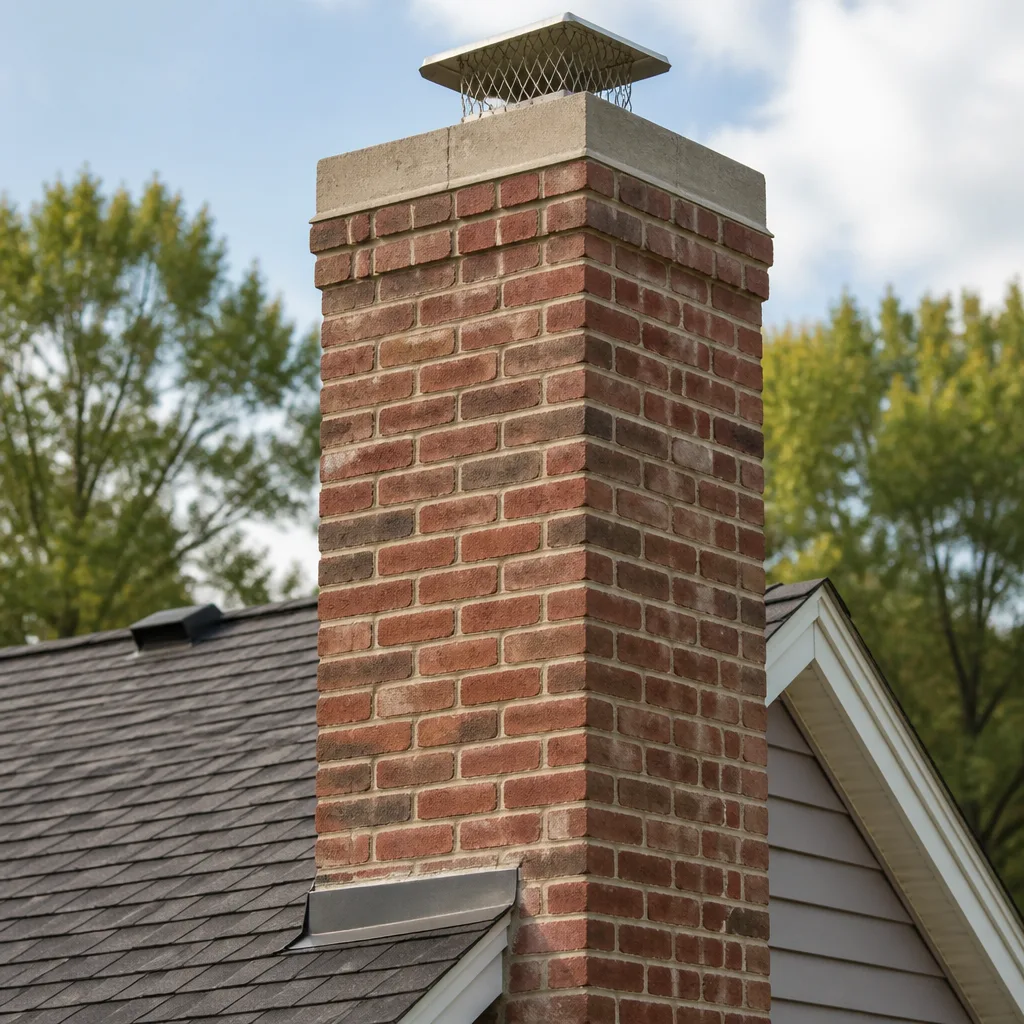
- Ignoring the cap and crown because the flue looks good. Water intrusion and wildlife entry are the two most common Lehi chimney problems, and both are solved at the top. A clean flue with a bad crown will need masonry work within a few freeze-thaw cycles.
- Using a wire brush on a metal liner. Wire bristles can score a stainless liner or damage a factory-built flue. The brush type matters; match it to the liner material before you start.
- Climbing the roof without proper fall protection. Chimney brushes and ladders aren’t a safe combination on a pitched or snow-dusted roof. Every winter in this valley, someone gets hurt doing work a technician could do more safely.
- Treating a brush swipe as an inspection record. If you have a chimney fire, the insurer wants a dated professional report. A self-brushed flue leaves no trail, and the claim gets harder to resolve.
- Skipping the smoke chamber and damper area. Most bottom-up DIY brushing stops above the damper. The smoke chamber is where a significant amount of creosote sits, and it takes angles and lighting a brush kit doesn’t provide.
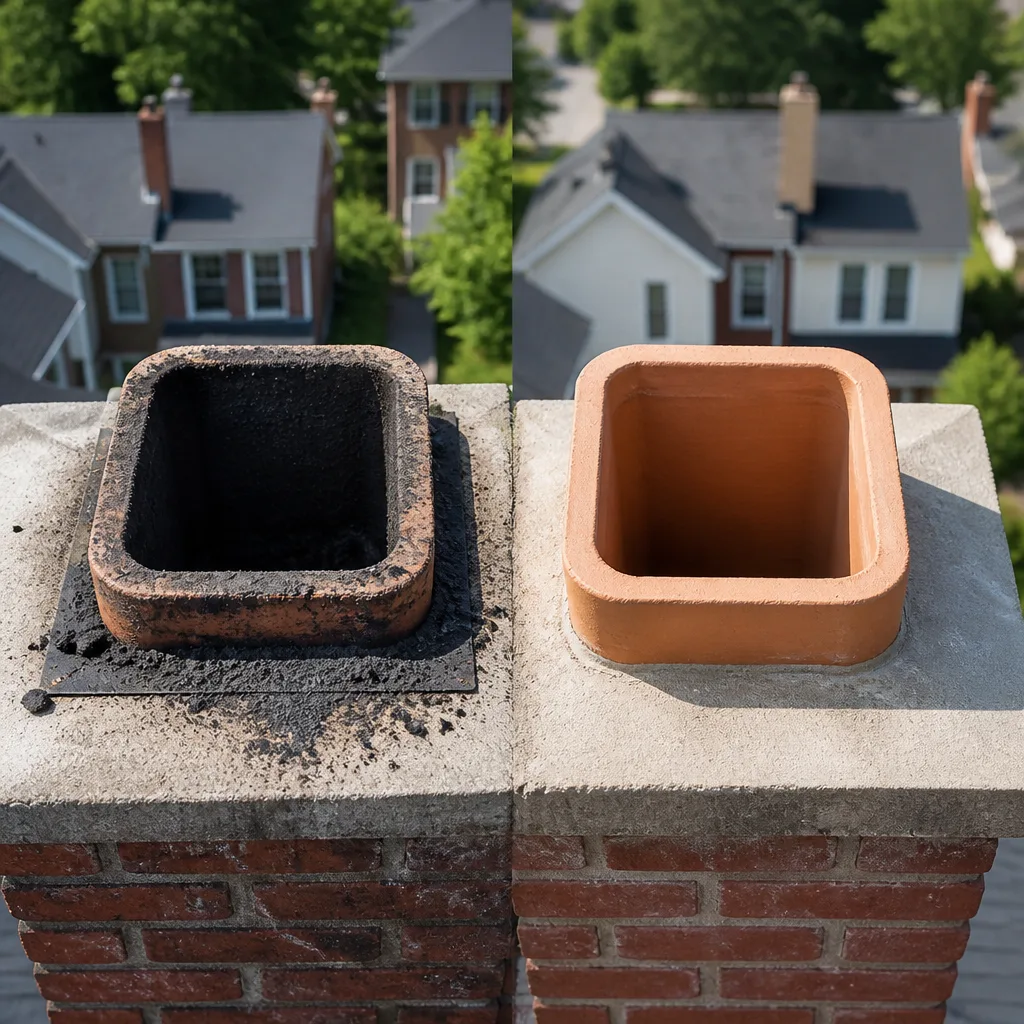
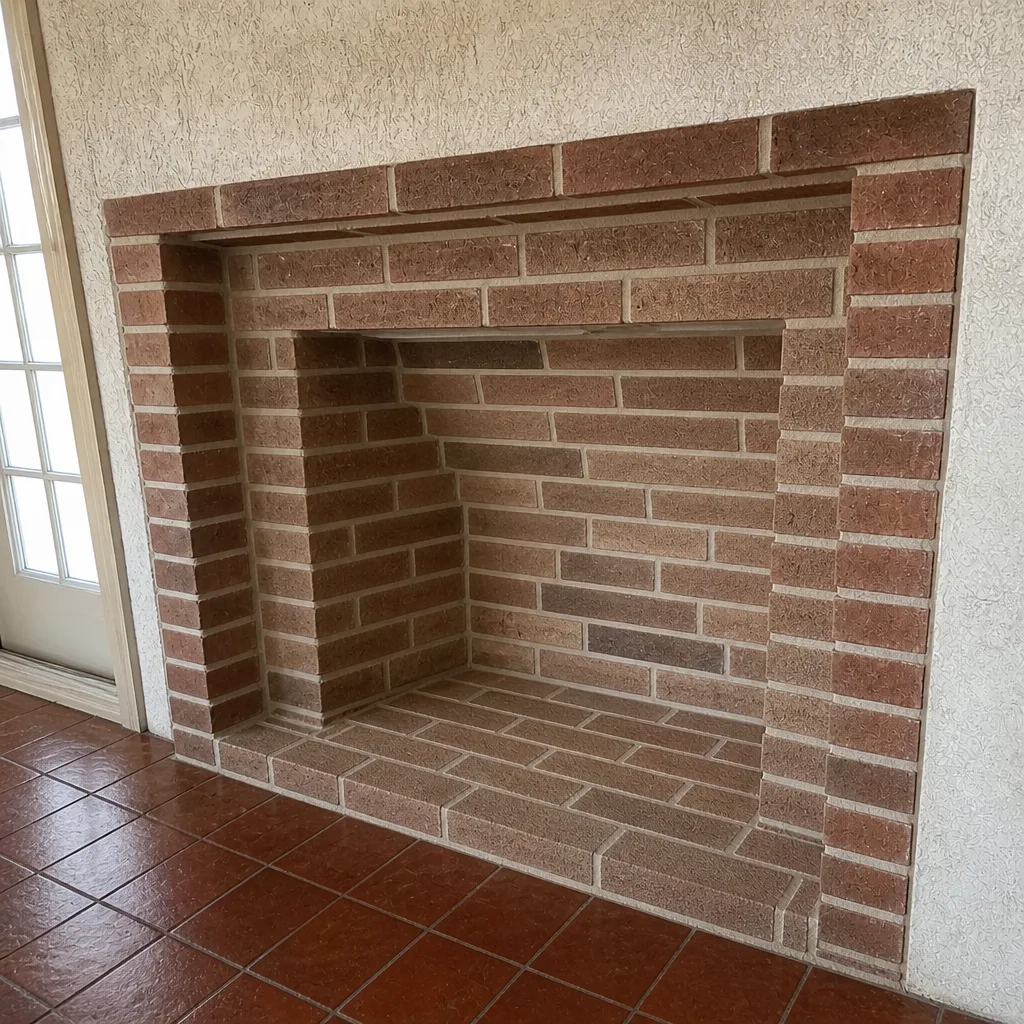
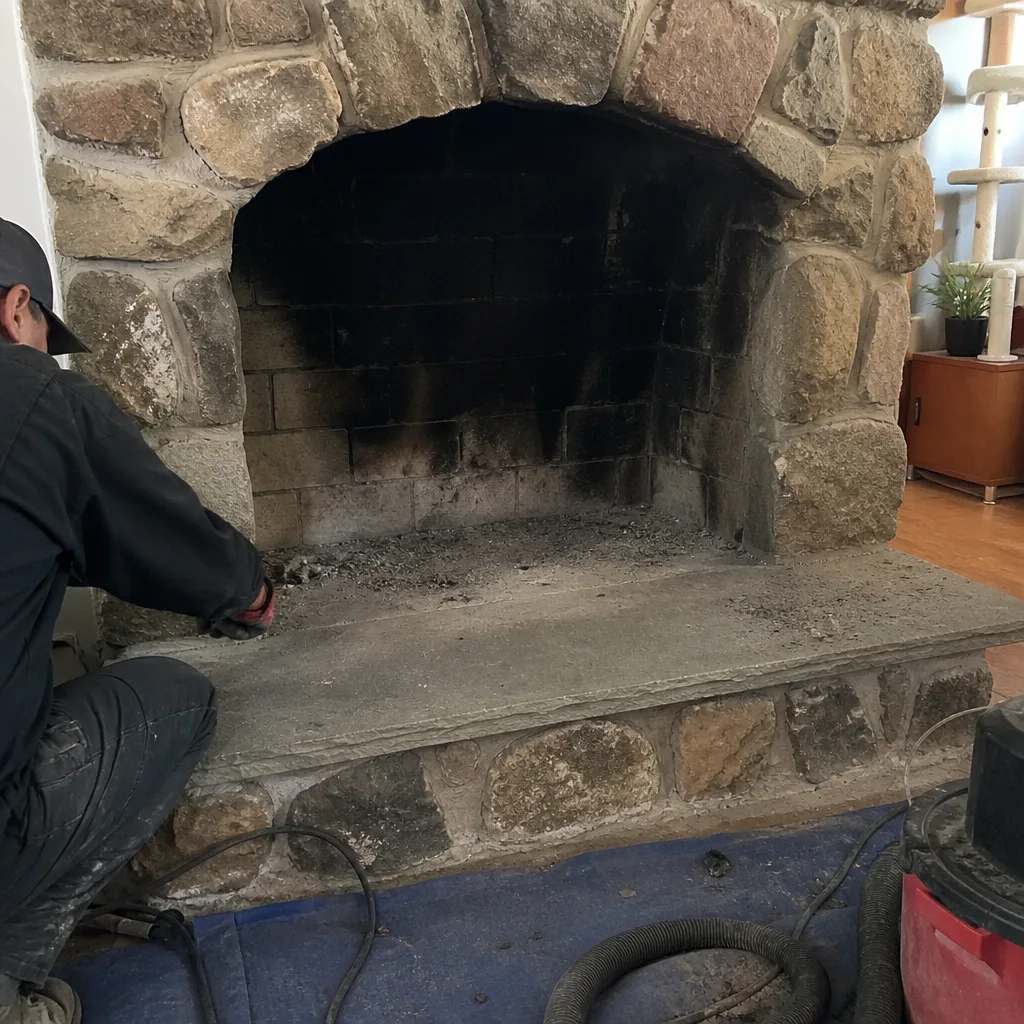
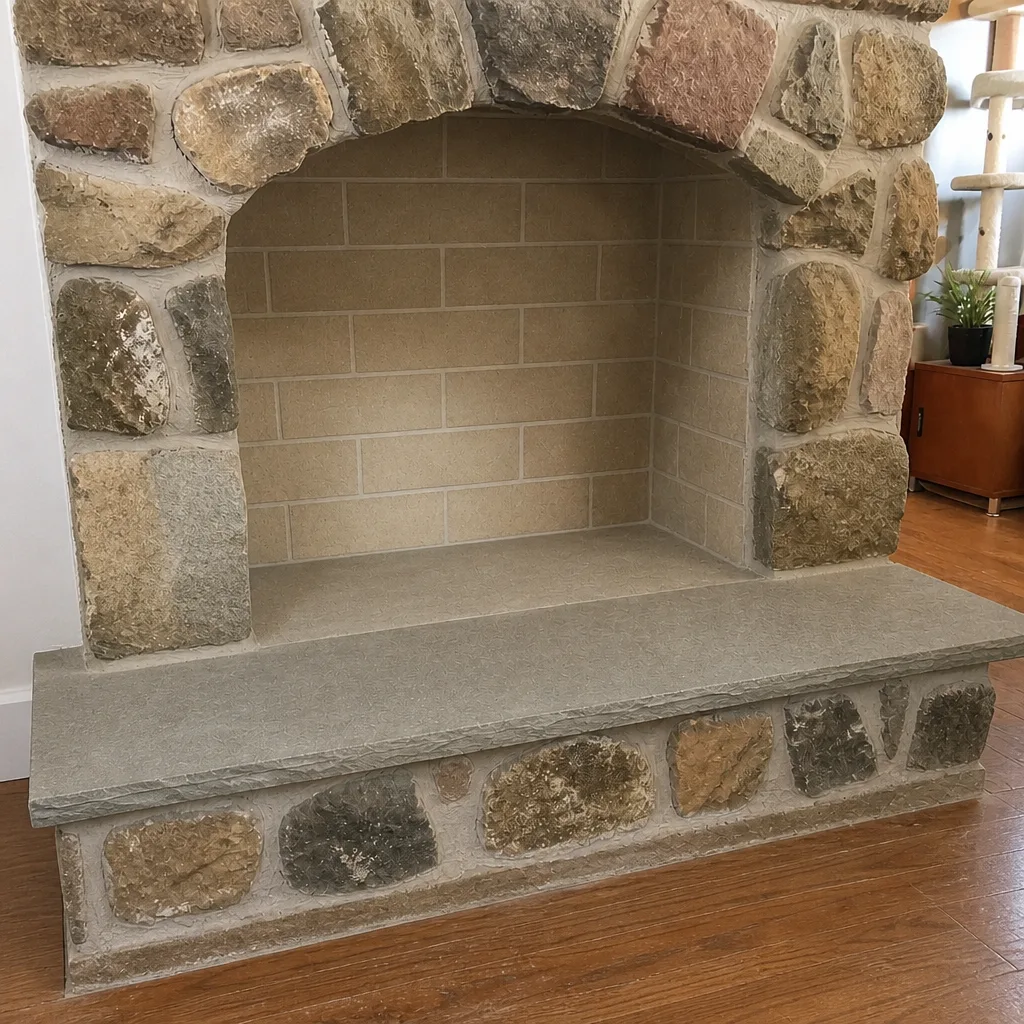
See the difference
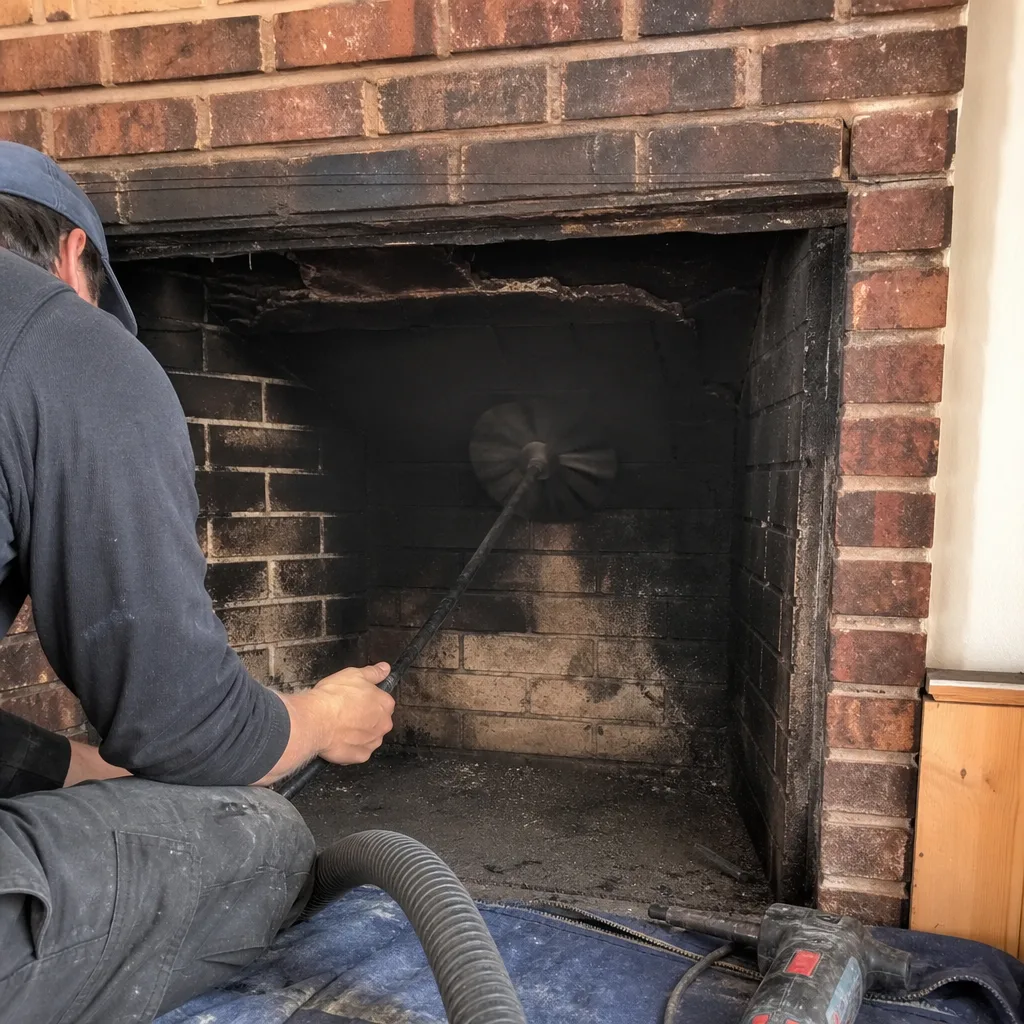 Before
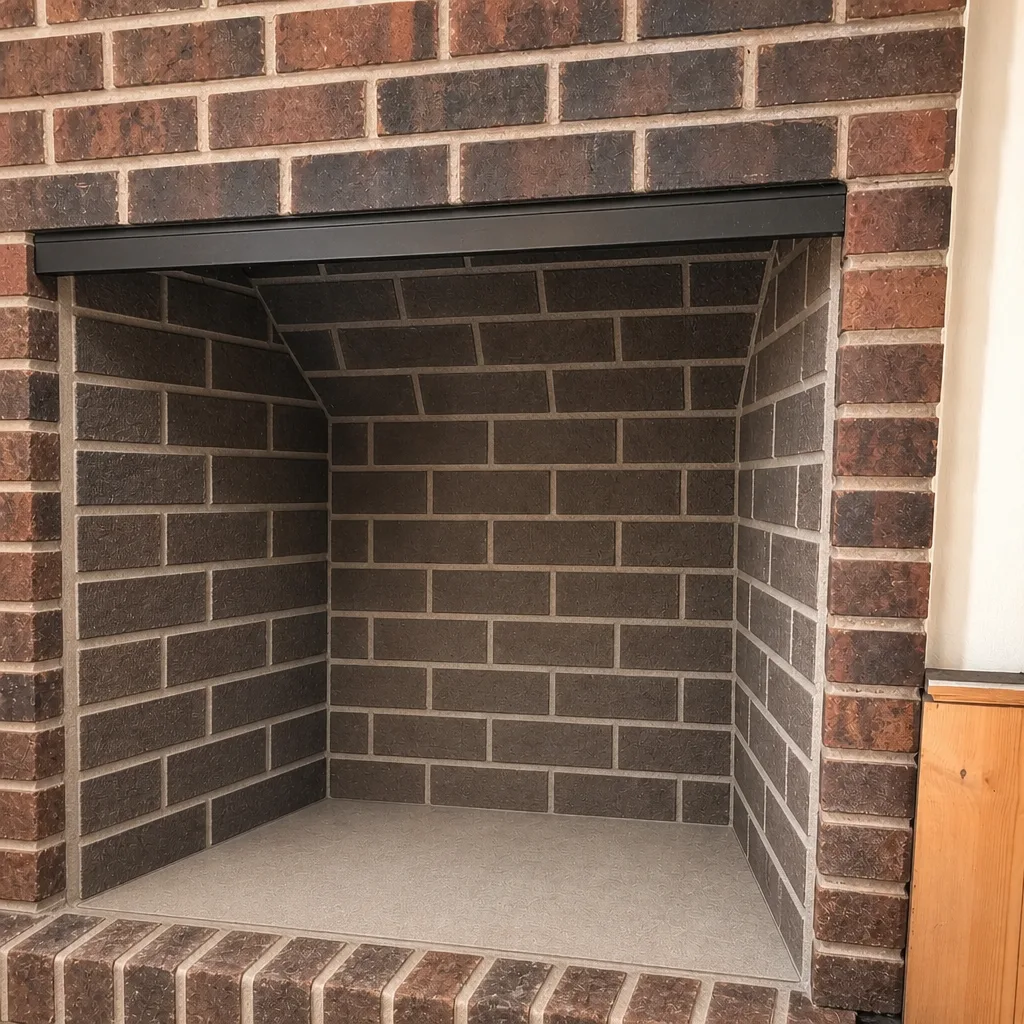 After
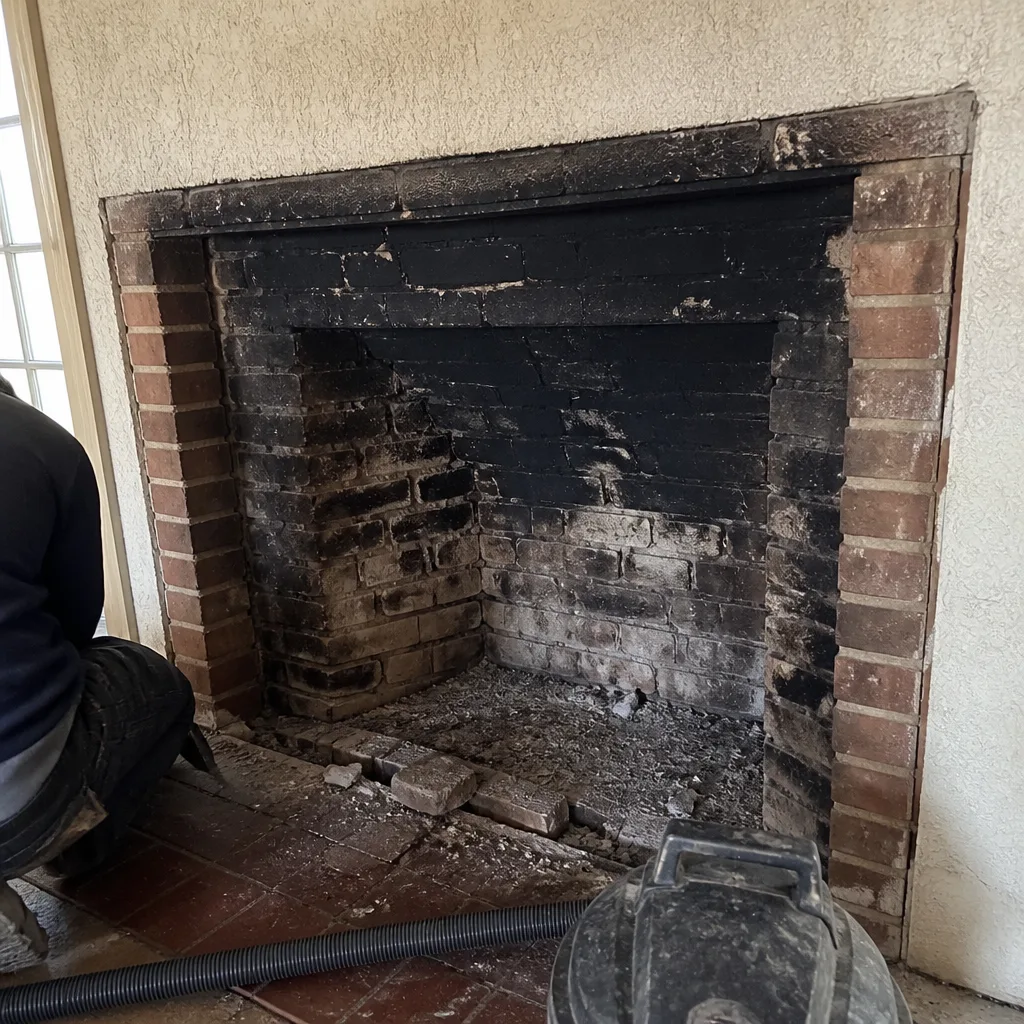 Before
 After
 Before
 After
When to Call a Professional
Call a professional if any of these apply: the flue is two-story or has offsets you can’t reach; you’ve never had a camera inspection; there’s visible staining on the masonry, a draft problem, or a smell from the firebox; the appliance is a wood-burning insert doing real heating work; or you’re unsure of the creosote stage. Those aren’t judgment calls to defer – they’re the cases where a guess could cost more than a sweep. Chimney Sweep Lehi offers free estimates in Lehi – call (855) 337-1677. We answer 24/7, and fast dispatch runs 7am to 7pm, Sunday through Friday.
Frequently Asked Questions
You can safely brush your own flue only if a prior professional inspection confirmed Stage 1 creosote, the flue is accessible and single-story, and you have proper containment gear. For most Lehi homes, the professional visit isn’t the cleaning – it’s the inspection and documentation. Call (855) 337-1677 for a free estimate.
Once per heating season is the general standard for a wood-burning chimney, though a lightly used gas fireplace may stretch to every couple of years with annual inspection in between. Lehi’s cold winters mean wood appliances run longer, so a yearly sweep is the safer default here. Call (855) 337-1677 for a free estimate.
Creosote accumulates through the season, and Stage 2 and Stage 3 deposits are far more flammable than the loose soot you brushed off. A flue with heavy glazed creosote is more likely to have a chimney fire, and the flue liner may also have cracks that were never caught. Call (855) 337-1677 for a free estimate.
Coverage varies by policy, but the insurer will look for evidence of maintenance, and a self-brushed flue with no dated report leaves them nothing to work with beyond whether the loss traces to deferred maintenance. A professional inspection record changes that. Call (855) 337-1677 for a free estimate.
A brush kit removes loose soot from the flue section you can reach; a camera inspection shows you the liner condition, mortar joints, and creosote stage in parts of the flue no brush can reach. The brush cleans the flue you can see; the camera confirms the flue you can’t. Call (855) 337-1677 for a free estimate.
Call when the flue is two-story, has never been inspected, shows staining or draft problems, or serves a wood-burning insert. Brush it yourself only between annual professional inspections, with a baseline report in hand to confirm what you’re starting from. Call (855) 337-1677 for a free estimate.
The Bottom Line
DIY chimney brushing is a real option, but a narrow one. It works for a low-use appliance, a reachable single-story flue, proper containment gear, and a prior inspection confirming Stage 1 only. Outside those conditions, you’re not cleaning the part of the chimney that matters – you’re cleaning the visible part and guessing about the rest. For Lehi homeowners, the practical answer is this: get a baseline inspection once, brush between professional visits if the conditions fit, and call when anything looks uncertain. The flue you can see isn’t the whole chimney, and a brush can’t tell you what it’s missing. We handle the full system – sweep, chimney sweep inspection, cap and crown, liner repair, and fireplace repair – so one call covers both ends of the chimney. Reach us at Chimney Sweep Lehi at (855) 337-1677 for a free estimate.
Written by the team at Chimney Sweep Lehi.