
HeatShield Chimney Sweep in Lehi: A Homeowner’s Guide
A full stainless steel liner replacement for a standard two-story Lehi home typically runs $2,500 – $4,500. Here’s what a lot of homeowners don’t hear until after they’ve been quoted that number: a good share of those jobs could have been handled with a HeatShield application at roughly half the cost, if the damage had been caught at the right stage. HeatShield isn’t a patch kit or a bottle of caulk. It’s a ceramic composite resurfacing system built to bring a compromised clay tile flue back to code-compliant condition. This guide covers what it actually is, when it’s the right call, when it isn’t, and how to tell the difference before you sign anything.
If you’d rather have a specialist look at your flue than sort through it yourself, call (855) 337-1677. We answer 24/7, and estimates are free.
What HeatShield Actually Is (and What It Isn’t)
HeatShield is a ceramic composite system designed to resurface the inside of a clay tile flue that’s cracked, spalled, or losing mortar at the joints. It’s not a coating you brush on and forget. The CeCure 201 and Resurfacer products are formulated to meet ASTM standards for chimney lining materials, which is the part general contractors tend to gloss over. Those standards are what separate a real resurfacing system from a hardware-store tube of furnace cement.
What it isn’t: it’s not structural repair. It doesn’t rebuild a flue that’s pulling apart, and it doesn’t fix a liner that’s offset or shifted. It restores the smooth, sealed surface of a flue that’s still standing but no longer sound. Think of it as resurfacing a road that’s cracked but still has its base. If the base is gone, you’re not resurfacing anything.
This matters in Lehi because the material question comes up on almost every inspection. Homeowners are told they need a liner, and they have no way to verify whether that’s true. Our approach is simple: we diagnose before we quote, and nothing gets recommended without camera evidence you can see for yourself. If HeatShield will solve the problem, we’ll say so. If it won’t, we’ll say that too.
HeatShield-certified resurfacing is a capability most local competitors can’t offer at all, which is one reason the more expensive liner replacement gets pushed so often. When the only tool you have is a hammer, every flue looks like a nail.
When HeatShield Is the Right Repair for Your Lehi Flue
HeatShield is the correct repair for a specific set of damage profiles. If your flue fits one of these, resurfacing restores it without the cost and disruption of a full stainless liner:
- Hairline cracks in the clay tiles. Small fissures that let heat, moisture, and combustion gases migrate into the surrounding masonry are the classic HeatShield case. They’re common in older Lehi homes and easy to miss without a camera.
- Spalling tile faces. When the inner surface of the tile begins to flake and pit from repeated heating and cooling, the flue loses its smooth boundary. Resurfacing rebuilds it.
- Mortar joint erosion in an otherwise sound flue. The joints between tiles can wash out over time while the tiles themselves stay intact. That’s a resurfacing job, not a replacement job.
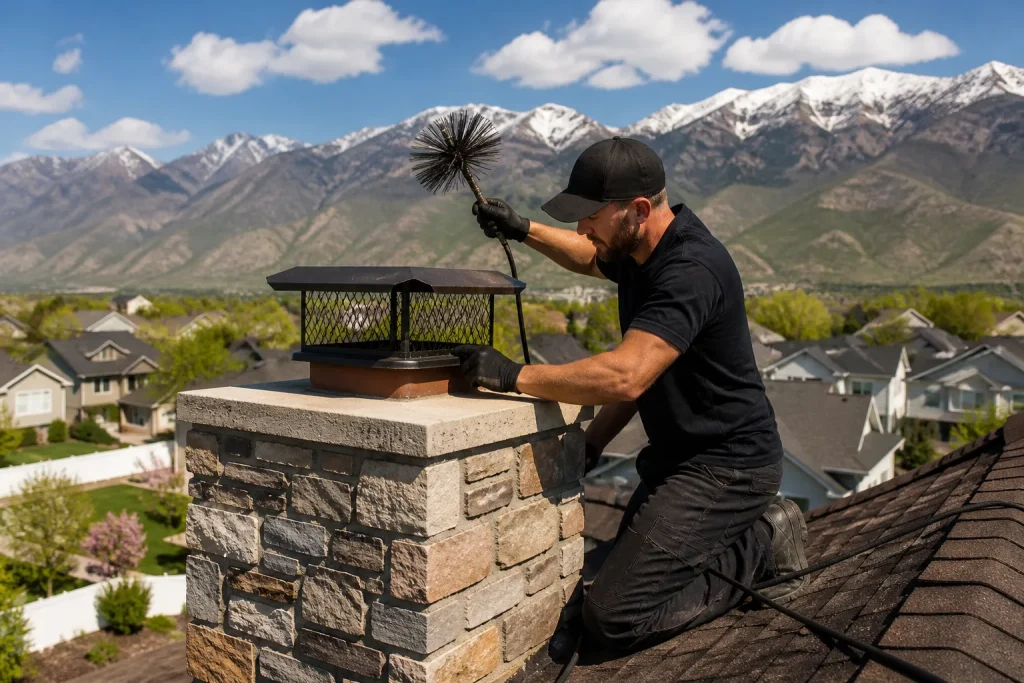
The common thread is that the flue is still structurally sound. The tiles are in place, aligned, and carrying load. What’s failed is the surface. HeatShield restores the surface, and the flue is back in service. A proper chimney sweep followed by a camera inspection is how you find out which category you’re in, and it’s the step that should come before any repair conversation.
We’ve seen plenty of flues that were one inspection away from a much smaller repair. Catching the damage at the hairline-crack stage is the whole point.
Why Lehi’s Climate Accelerates Liner Wear
Lehi sits in a valley with real seasonal range. Summers push into the high 90s and beyond, winters drop well below freezing, and the swing between the two is hard on masonry. Clay tile and mortar expand when they heat and contract when they cool. Repeat that cycle year after year, through hot attic-side summers and hard freezes, and the tile faces and joints take the beating first.
Add a wood-burning fireplace running through the cold months and you’ve got thermal cycling from two directions: the weather outside and the fire inside. That combination is why liner degradation shows up earlier here than homeowners expect, and why HeatShield makes sense as a preventive tool and not just a repair. If a camera inspection in the spring catches early surface damage, resurfacing at that stage costs a fraction of the liner replacement you’d be looking at two or three winters later.
Lehi’s freeze-thaw pattern also works on the outside of the chimney. Water gets into masonry, freezes, expands, and opens the joints further. That’s why a sound cap and crown matter as much as the flue itself: keeping water out of the structure is what slows the whole cycle down. It’s also why we treat the chimney as a system and inspect the cap, crown, firebox, and flue together rather than cleaning the flue and calling it done.
How HeatShield Is Applied, Step by Step
The application process is methodical, and the first step is the one that matters most. Here’s how a typical HeatShield job runs:
- 1
Level 2 inspection with a camera. Non-negotiable. We run a camera the full length of the flue and document the condition of every tile and joint. Without that footage, nobody can honestly say whether resurfacing is appropriate. Before any application, you should see what we see.
- 2
Sweep and prep the flue. The flue has to be clean and the surface sound enough to bond. Loose material gets removed; glazed or heavily damaged sections are addressed first.
- 3
Apply the resurfacer. The ceramic composite is applied to the flue interior to rebuild a smooth, sealed surface over the damaged clay. This is skilled work, sized to the flue, and it’s why the material specification matters.
- 4
Apply CeCure 201. The finishing layer seals the surface and completes the system.
- 5
Cure and verify. The lining cures, then we verify the result with a follow-up camera pass and give you the documentation.
The materials we use are professional-tier: HeatShield for resurfacing, plus DuraFlex liner systems, Olympia Chimney, Famco, and Gelco for the rest of the system when a job calls for them. These are the products chimney professionals specify, not off-the-shelf substitutes. That’s not a sales point so much as a durability question: a resurfacing job is only as good as the material holding it to the tile.
When HeatShield Is Not the Right Answer
Honesty about the limits is the whole point of this guide. HeatShield won’t fix every flue, and pushing it where it doesn’t belong is just a cheaper way to get the wrong result. It’s not appropriate when:
- The flue has severe structural fractures. If tiles are broken through or the flue is losing integrity, resurfacing has nothing sound to bond to. A stainless liner is the honest alternative.
- The liner sections are offset. A shifted or misaligned flue can’t be resurfaced back into line. The geometry has to be corrected, and that means a liner.
- The smoke chamber is compromised. A damaged smoke chamber is a separate problem from the flue lining, and resurfacing the flue won’t address it. That’s a repair conversation, and possibly a chimney repair scope rather than a lining one.
When HeatShield isn’t right, we say so, and we explain why with the camera footage in front of you. What we won’t do is recommend thousands of dollars of liner work without evidence you can verify. And when a problem can safely wait, we tell you that too. Not every cracked tile is an emergency, and a specialist who treats it like one isn’t doing you a favor.
When to Call a Pro
Some chimney work is a homeowner task. Resurfacing a flue is not one of them, and neither is judging whether your flue needs it. If you’ve noticed staining on the masonry, a draft that’s gotten worse, an odor from the fireplace when it’s not in use, or visible damage to the crown or cap, that’s the moment to get a camera inspection rather than guess. Combustion gases and carbon monoxide are the reason this work is safety-critical, and a flue that looks fine from the firebox can be cracked the whole way up.
We’re a dedicated chimney company, not a multi-trade generalist. Sweeping, inspection, HeatShield resurfacing, cap and crown work, and fireplace repair all fall under the same roof, so you’re not coordinating three contractors and hoping they agree. Our technicians have up to 10 years of experience, and the local pro we connect you with is licensed and insured as their state requires.
Related services in Lehi: if you’re starting from scratch, begin with a Chimney Sweep Lehi inspection and go from there. The chimney sweep visit is where the camera footage comes from, and it’s the appointment that tells you whether you’re looking at $180 – $340 for a sweep and inspection or something larger.
What HeatShield Costs in Lehi, and How It Compares
Homeowners ask for a number before anything else, so here’s the honest range. These are typical estimates for the Lehi market. Your written estimate sets the final price.
| Service | Typical Estimated Cost |
|---|---|
| Chimney sweep with Level 2 camera inspection | $180 – $340 |
| HeatShield flue resurfacing | Roughly half the cost of a full liner replacement |
| Full stainless steel liner replacement (two-story home) | $2,500 – $4,500 |
| Chimney cap and crown work | Quoted per job after inspection |
The comparison that matters is the middle two rows. A resurfacing job restores a sound-but-damaged flue for a fraction of what a full liner runs. That savings only exists if the damage is caught before the flue crosses into structural failure, which is exactly why the annual inspection isn’t a formality. The chimney is a system, and the flue, crown, cap, and firebox all need to be working together. A sweep that skips the camera is a cleaning, not a diagnosis.
The Bottom Line
HeatShield is a real repair option, not a shortcut: a ceramic composite system that restores a compromised clay tile flue to code-compliant condition when the damage is surface-level rather than structural. It’s the right call for hairline cracks, spalling, and eroded mortar joints in an otherwise sound flue, and Lehi’s wide temperature swings make it worth considering as preventive maintenance rather than waiting for a full liner. It’s the wrong call for severe fractures, offset sections, or a compromised smoke chamber, and any honest specialist will tell you which one you’re looking at, with the footage to back it up.
The takeaway is to get the camera inspection first, before anyone quotes you a liner. That single step is what separates a $300 problem from a $4,000 one. If you’re in Lehi and need help, Chimney Sweep Lehi offers free estimates. Call (855) 337-1677. We answer 24/7. Fast dispatch from 7am to 7pm, Sunday through Friday.
Frequently Asked Questions
It depends on the damage. HeatShield restores a structurally sound flue with surface-level damage, and for that situation it performs as a code-compliant lining at roughly half the cost of replacement. For severe structural fractures, offset sections, or a compromised smoke chamber, a stainless liner is the correct repair and HeatShield is not an option. The camera inspection is what tells you which situation you’re in.
A properly applied HeatShield lining is designed to serve as a durable flue surface, and its lifespan depends on the condition of the flue beneath it and how the chimney is maintained afterward. Annual inspections are what keep it working: they catch new cracks early and confirm the cap and crown are still keeping water out. Call (855) 337-1677 for an exact quote on your flue, because estimates are free.
Yes, and it’s the one step we won’t skip. Resurfacing only works on a flue that’s structurally sound, and you can’t confirm that from the firebox. A Level 2 inspection with a camera shows every tile and joint, which is what determines whether HeatShield is appropriate or whether you need a liner. Any contractor willing to quote resurfacing without that footage is guessing.
Small cracks let heat, moisture, and combustion gases into the masonry, and in Lehi’s freeze-thaw cycle that damage compounds season to season. What starts as a hairline crack can turn into spalling and joint erosion, and eventually a resurfacing job becomes a full liner replacement. Carbon monoxide migration into the home is the safety concern, which is why we don’t treat a cracked flue as something to get to later.
Written by the team at Chimney Sweep Lehi.
Need Chimney Cleaning Help?
Call Chimney Sweep Lehi - the local pro we connect you with is licensed and insured, here with fast help in Lehi.
(855) 337-1677