
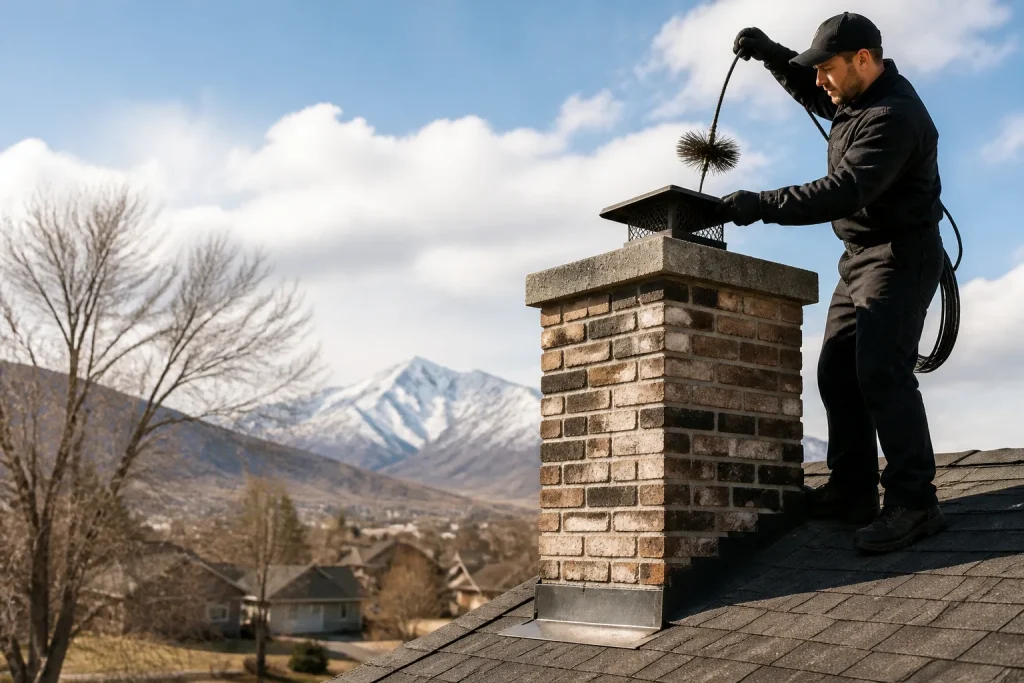
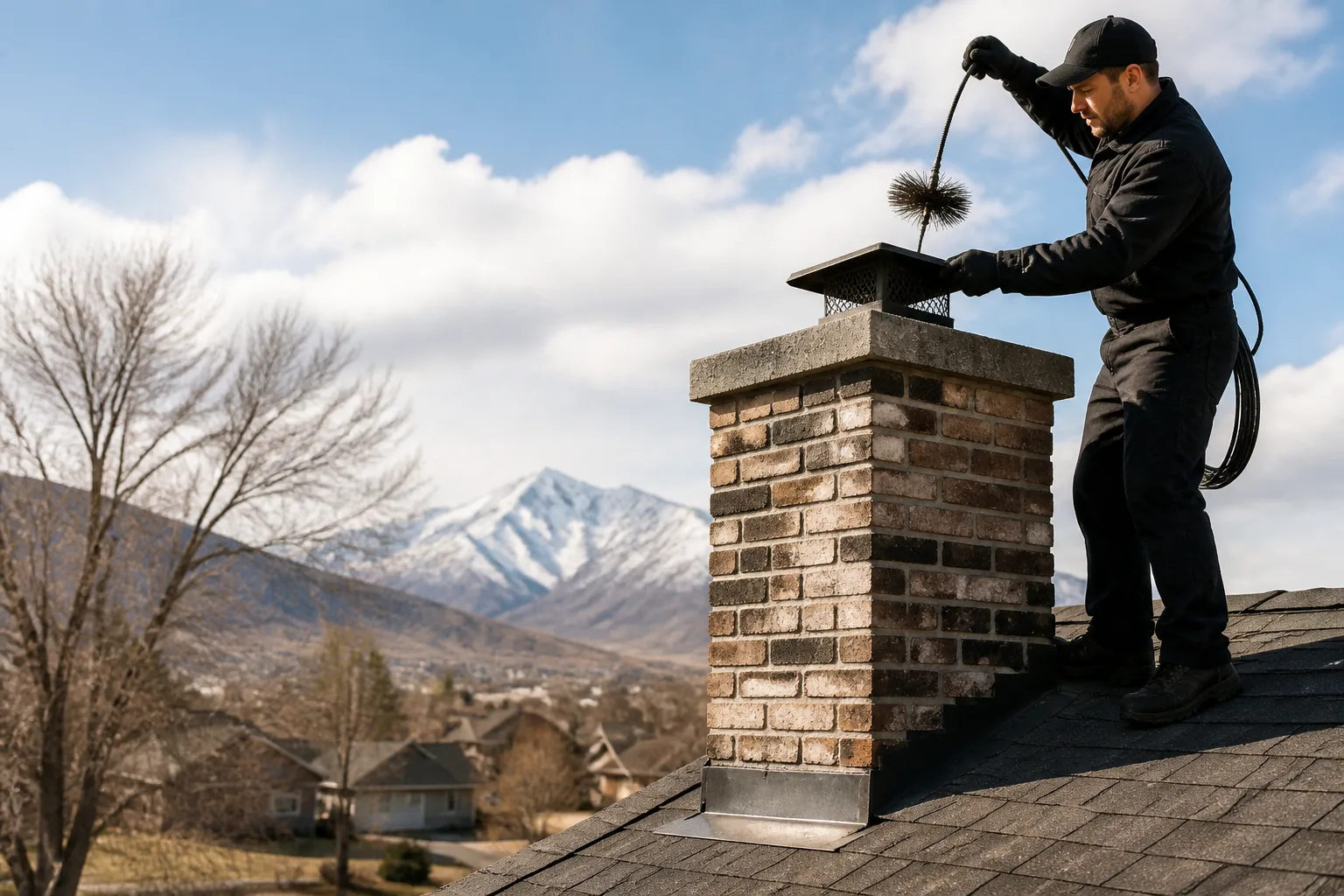
Chimney Sweep: Repair or Replace? How Lehi Homeowners Decide
The most expensive chimney mistake Lehi homeowners make isn’t choosing replacement over repair. It’s paying for a stainless liner installation in a firebox with a cracked smoke chamber, essentially routing clean exhaust through a compromised combustion zone. Repair or replace isn’t one decision. It’s four separate decisions across the flue liner, the firebox, the masonry, and the crown, and each one has its own cost-benefit math. Treat it as a single all-or-nothing question and you’ll either overspend on full replacement or underspend on a repair that fails within two years.
If you’d rather have a specialist walk your system with a camera before you decide anything, call (855) 337-1677. We answer 24/7. Fast dispatch from 7am to 7pm, Sunday through Friday.
Why “Repair or Replace” Is the Wrong Question
Ask most homeowners whether they need a repair or a replacement and they’re picturing the whole chimney as one unit. It isn’t. Your chimney is a system of distinct parts that fail on different timelines, for different reasons, and at different price points. The liner ages from heat and creosote. The crown cracks from freeze-thaw cycles and UV. The firebox takes the direct heat of every fire. The smoke chamber above the damper collects soot and degrades quietly where nobody looks without a camera.
The reason this matters in Lehi specifically is our freeze-thaw swings. Winter nights drop hard and clear afternoons warm back up, and masonry that absorbs moisture doesn’t like that rhythm. A crown that’s cracked here will pull water into the chimney body with every snowmelt and rain event, and the damage shows up months later somewhere else. A homeowner who “just needs a sweep” may have three components in different condition.
So we diagnose before we quote. Every visit starts with a structured inspection so the recommendations map to actual findings, not a package deal. That’s the only way the repair-versus-replace math stays honest.
Component by Component: How the Four Decisions Break Down
Here’s the framework we use on every Lehi chimney we assess. Treat each of these as its own yes-or-no question.
The flue liner
This is the one that carries the real safety stakes. A clay tile liner with isolated cracks can often be restored with HeatShield resurfacing, which casts a new smooth surface inside the existing tiles. That’s a genuine alternative to full relining and it saves real money. But when tiles are displaced, shattered, or missing entirely, resurfacing has nothing to bond to, and a stainless liner (we work with DuraFlex systems) is the answer. The camera footage is what separates the two. You should see the cracks on screen, not just hear about them.
The firebox and smoke chamber
A firebox with spalled brick and open mortar joints can usually be repaired. A smoke chamber is different: it sits above the damper and shapes how exhaust enters the flue. Cracks and rough surfaces there slow the draft and collect creosote in places a brush can’t reach. If you’re relining the flue, address the smoke chamber in the same project. Doing them separately is how people end up paying twice.
The masonry and crown
Exterior brick and mortar joints are repairable almost indefinitely as long as the structure is sound. The crown, the concrete cap on top, is the single most common source of water intrusion we find in Lehi, and a cracked or crumbling crown is a repair, not a replacement. Pair it with a properly fitted cap from a maker like Olympia Chimney and you’ve closed the two biggest doors water and wildlife use to get in.
- Resurface: isolated liner cracks, sound tile structure, no displacement.
- Reline: displaced, missing, or shattered tiles, or a pre-1980 home with no liner at all.
- Repair masonry: spalled brick, open joints, cracked crown with sound structure underneath.
- Replace component: failed crown beyond patching, or a firebox with structural cracking.
What the Camera Actually Shows You
When we run a camera inspection in Lehi, here’s what matters on the screen. You’re looking for the difference between surface problems and structural ones.
- Hairline cracks in tile: often resurfaceable. HeatShield can restore the flue surface without tearing out tile.
- Missing mortar joints between tiles: resurfaceable in many cases, depending on how much is gone.
- Displaced or offset tiles: not resurfaceable. The geometry won’t hold a new lining, so a stainless liner goes in.
- Shattered or absent tiles: reline, no debate. This is the case where exhaust is meeting the structure it was never meant to touch.
- Heavy glazed creosote: needs professional removal before any relining work, because a new liner over it traps the problem.
Ask to see the footage and have the deficiencies written down. A technician who can’t or won’t show you the camera report is asking you to trust a verdict you can’t verify. We hand over the condition assessment on every inspection for exactly this reason.
How Lehi Home Age Changes the Baseline
Homes built before 1980 in Lehi often have no liner at all, or a single course of clay tile that was never meant to carry a modern appliance. That flips the decision entirely. You’re not choosing between repairing an existing liner and replacing it. You’re installing the first liner the chimney has ever had. That’s a different project with a different budget, and it should be framed that way from the start.
Newer construction isn’t automatically fine. Factory-built fireplaces with prefabricated flues have their own failure modes, and the liner system has to match the appliance. A wood stove retrofit into an older flue is another case where the original liner may be sound but undersized for what’s now connected to it. Ask what your flue was built for before you assume “it’s fine because nothing’s broken.”
The Cost Math: Repair vs. Replacement, Honestly
We won’t quote you a number before we’ve seen your chimney, but here’s the shape of the decision. Repairs are incrementally cheaper and buy you time. Full replacement is a one-time larger spend. The question is which components are actually at end of life.
- HeatShield liner resurfacing: costs meaningfully less than a full stainless reline and restores a compromised clay flue. It’s the option most local competitors can’t offer, which is why you may not hear about it elsewhere.
- Crown rebuild or repair: a repair-level cost and one of the best returns you’ll get, because it stops water at the source.
- Cap replacement: the least expensive item on this list, and the one that prevents the most downstream damage.
- Full stainless liner installation: the largest single line item, and the one you want to get right the first time so you’re not paying for it twice.
Lifespan expectations track the materials. A properly installed stainless liner, a resurfaced flue, and a sound crown each give you a long service window. A patch on a structurally failed component does not, and that’s the repair that fails in two years. Our technicians have up to 10 years of experience reading exactly that distinction.
When to Call a Pro (and When It Can Wait)
Some things genuinely can wait. A slightly worn crown that isn’t yet letting water in, or a cap that’s intact but dated, can go on the list for the next scheduled visit. Others can’t. Cracks in the flue liner, glazed creosote, a smoke chamber with open joints, or any indication that exhaust is escaping the flue are all reasons to stop burning until the system is assessed. Carbon monoxide and chimney fire risk are the two reasons we don’t soften that.
Here’s the humor-free version: a sweep is a maintenance visit and a safety check. If your last inspection turned up nothing and you burn a cord a year, you’re likely fine on schedule. If you’ve never had the flue looked at with a camera, that’s the call to make first.
Related services in Lehi: we handle chimney sweep, fireplace repair, and chimney repair as part of full-system care, so a single visit covers inspection, cleaning, and the repairs it turns up. Start with Chimney Sweep Lehi if you’re not sure which service applies.
The Bottom Line
Decide liner, firebox, smoke chamber, masonry, and crown separately. Let camera evidence drive each call. Resurface when the tile structure allows it, reline when it doesn’t, and fix the crown before water does the deciding for you. And get the deficiencies in writing before you authorize anything. That’s the whole method, and it’s the one that keeps Lehi homeowners from overspending on a full replacement they didn’t need or underspending on a repair that won’t hold.
If you’re in Lehi and need help, Chimney Sweep Lehi offers free estimates. Call (855) 337-1677. We answer 24/7. Fast dispatch from 7am to 7pm, Sunday through Friday.
Frequently Asked Questions
Many clay tile liners can be resurfaced with HeatShield rather than replaced, as long as the tiles are still in position and structurally sound. Displaced, shattered, or missing tiles can’t be resurfaced, and those need a stainless liner. The camera inspection tells you which case you’re in. Call (855) 337-1677 for an exact quote. Estimates are free.
Homes built before roughly 1980 in Lehi often have no liner or only a basic clay tile course, and you can’t confirm by looking up from the firebox. A camera inspection settles it in one visit. Call (855) 337-1677 to book one.
Cracked liners, glazed creosote, and smoke chamber damage all progress quietly, and the failure modes are chimney fire and carbon monoxide exposure. Skipping an inspection means those conditions go undetected until something else forces the issue. Call (855) 337-1677 for a free estimate before burning season.
Yes, and a good one comes with documentation: camera footage you can watch and a written list of deficiencies with the recommended fix for each. If a quote arrives without either, treat it as a sales pitch rather than a diagnosis. Call (855) 337-1677 and we’ll show you what we find.
Written by the team at Chimney Sweep Lehi.
Need Chimney Cleaning Help?
Call Chimney Sweep Lehi - the local pro we connect you with is licensed and insured, here with fast help in Lehi.
(855) 337-1677