
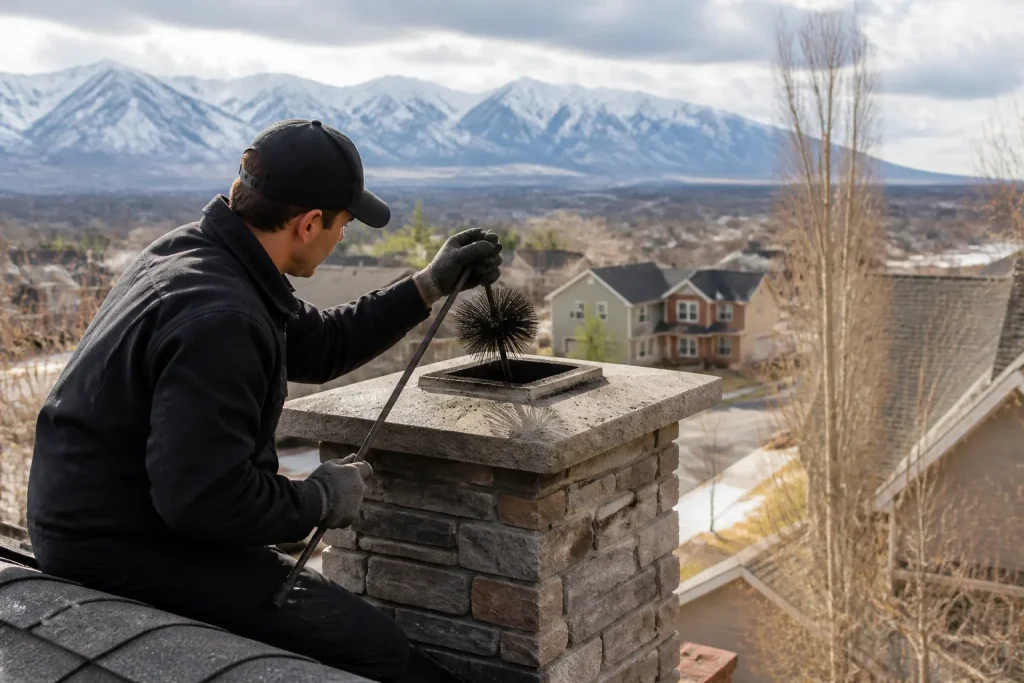
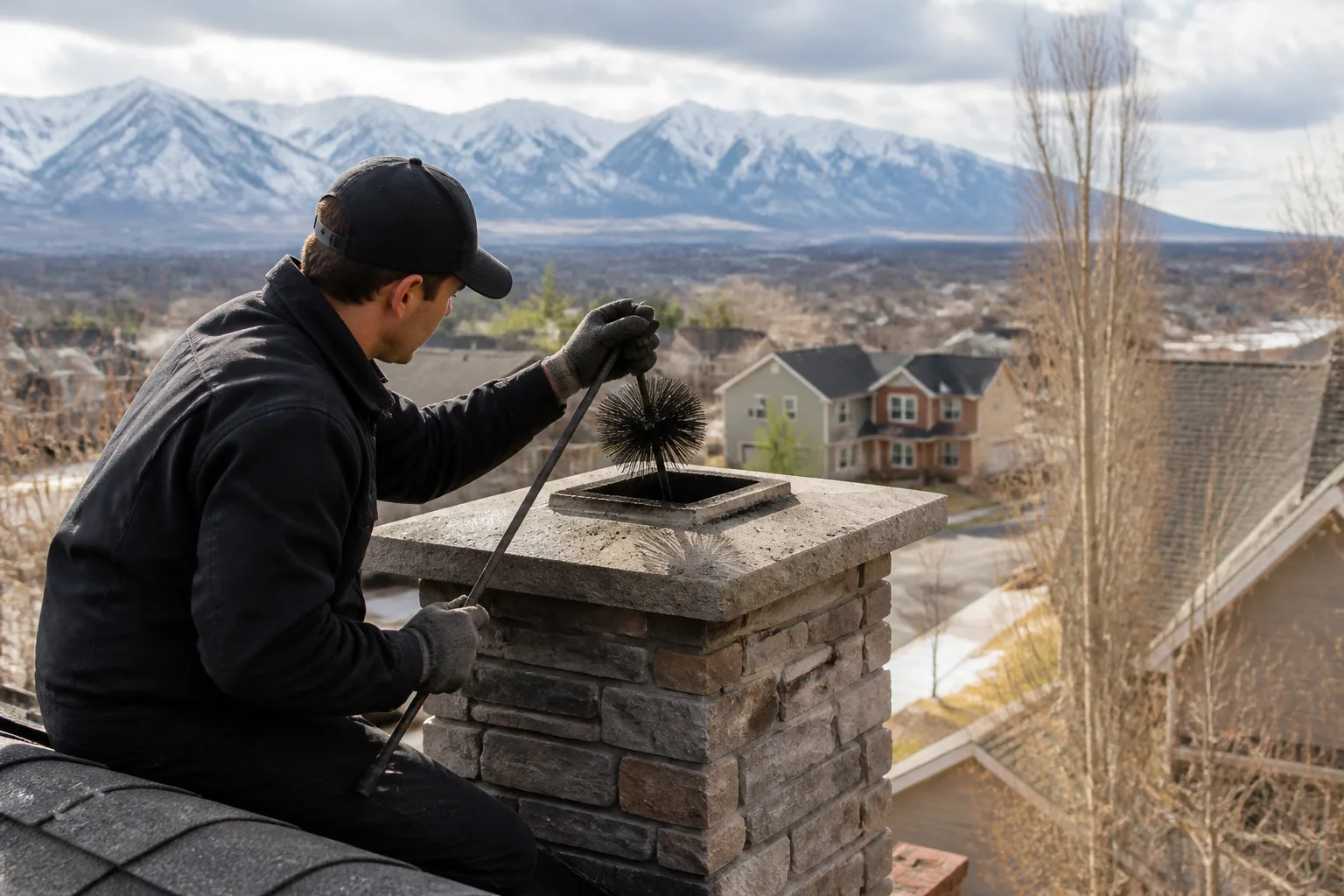
Emergency Chimney Sweep Near Me: What Lehi Homeowners Should Do First
Most chimney emergencies in Lehi start quietly. A faint roaring, a puff of smoke where there shouldn’t be one, a stain that wasn’t on the ceiling last week. If you typed “emergency chimney sweep near me” into your phone, stop lighting fires until someone who knows flues has looked at yours. We’ll walk you through what to do in the first hour, what to photograph, and how to tell a genuine emergency from something that can safely wait a day or two. And if you’d rather not sort through it alone, call (855) 337-1677. We answer 24/7.
Here’s the short version before we get into detail: a suspected chimney fire or any sign of carbon monoxide coming back into the room means get everyone out and call 911 first. A cracked crown, a loose cap, a draft that’s been getting worse for weeks, or a stain on the masonry usually means stop burning and book a sweep and inspection. The rest of this post explains how to make that call with confidence.
Key Takeaways
- A suspected chimney fire or CO backdraft is a 911 call, not a service call.
- Stop burning immediately if you smell creosote, see smoke in the room, or hear roaring in the flue.
- Close the damper and glass doors to cut the air supply, but leave the firebox sealed.
- Photograph everything before anyone arrives. Your insurer will ask.
- Lehi’s clay soil and freeze-thaw swings accelerate masonry failure in ways homeowners often miss.
- Book a specialist, not a generalist. Chimney systems are their own trade.
Which Chimney Problems Are True Emergencies in Lehi?
Three situations require you to evacuate the house. Everything else is a stop-burning-and-book-a-pro situation. Here’s how to tell them apart.
Evacuate and call 911 if:
- A chimney fire may be underway. Loud roaring or popping from the flue, a hot chimney exterior, or dark smoke pouring from the top. Chimney fires can reach around 2,000°F inside the flue, which is enough to crack a terra cotta liner in minutes. Get out.
- You suspect carbon monoxide. Headaches, dizziness, nausea in the same room as the fire, or a CO alarm sounding. This is a backdraft or venting failure. Get everyone outside and call 911.
- The chimney or masonry looks structurally unstable. Bulging brick, a visible crack running through the stack, or pieces of masonry on the ground near the base. Sudden collapse risk is real and no one should be near that chimney until it’s assessed.
Book a sweep and stop burning if: a new stain on the masonry, a cap or crown that’s cracked or missing, smoke rolling into the room on lighting, a persistent creosote smell, a bird or animal in the flue, or a draft that’s gotten noticeably worse over several fires. These aren’t five-alarm problems, but they won’t fix themselves either, and continuing to burn makes them worse.
If you’re unsure which category you’re in, err on the side of evacuating. A sweep can confirm it was nothing. You can’t un-breathe CO.
How Do You Shut Down a Fireplace After a Suspected Chimney Fire?
Once you’re outside and 911 has been notified, or once you’ve confirmed with your instincts and the situation that it’s a shut-down rather than an evacuation, your job is to cut the air supply to the fire without opening the firebox. Oxygen feeds chimney fires. This is the single most useful thing you can do before help arrives.
What to do:
- Close the glass doors if your fireplace has them.
- Close the damper if the fire has died down and it’s safe to reach it. Never reach into a hot firebox.
- Do not open the firebox to look inside. That feeds the fire oxygen.
- Get a garden hose on the roof if it’s safe to access and point it down the flue – but only if you can reach the roof safely. If not, leave the roof alone.
- Keep the room clear and watch the chimney exterior with a flashlight for heat or smoke.
If you’re not sure whether the fire is out, don’t go back inside to check. Let the fire department do that. We’d rather get a call from you the following week saying it turned out to be nothing than find out you tried to inspect the flue yourself. Chimney work involves heights and high-tension components, and there’s a reason we train for it.
What Should You Photograph Before Anyone Arrives?
Photograph everything, from every angle, before a technician arrives and before you clean anything up. Your homeowner’s insurance claim will hinge on what you can document, and your adjuster will ask for photos of the damage, the flue, and any soot or smoke staining on the walls, ceiling, or furniture.
Here’s the shot list:
- Outside: the full chimney stack from the roofline up, plus any cap, cracks, or loose brick.
- Interior: the firebox, damper area, and any soot staining on the surround or ceiling.
- Any smoke damage to walls, furniture, or curtains in the room.
- The firebox after the fire is fully out and the area is cool.
- Any visible creosote buildup inside the firebox or damper entry you can see without reaching in.
Don’t scrub walls before you photograph. Don’t sweep the firebox before you photograph. Insurance adjusters want to see the damage as it occurred. If you have a pre-fire photo of the room, even better – it helps establish condition.
One note on insurance and who you hire: a general handyman or HVAC company who isn’t qualified to assess a chimney’s structural condition can complicate a claim. Insurers increasingly expect chimney work to be done by specialists who can document the diagnosis. We always start with a structured inspection, so any repair we recommend is backed by photos and a written condition report you can hand to an insurer.
Why Does Lehi’s Clay Soil Make Chimney Problems Worse?
Lehi sits on expansive clay soil, and the Wasatch Front’s freeze-thaw swings are hard on masonry. Clay holds water and swells when it freezes, then contracts when it thaws. That cycling works on the chimney’s foundation and the crown, and over a few seasons it can widen hairline cracks in mortar joints into something that suddenly looks structural.
What tends to happen here, in general terms: a homeowner notices a small crack in the crown or a bit of crumbled mortar at the base and assumes it can wait until spring. Then a hard freeze arrives and that cosmetic crack opens up into a gap where water and cold air get inside. The mortar fails inward. The crown cracks widen. And what was a quick repointing job becomes a rebuild.
In our experience, the specific Lehi pattern is that the freeze-thaw cycle hits the crown and the upper masonry hardest, and a cracked crown is the most common entry point for water intrusion. That’s why we start every visit with a full inspection of the cap, crown, and mortar joints – not just a sweep – so we can catch the small failures before the next hard freeze turns them into structural ones. Caps and crowns are also a preventive specialty many sweep-only outfits skip, and a properly fitted cap with a sound crown is the single best protection against water and pest entry.
You can read more about our chimney repair work if you want to understand the range of repairs a specialist handles.
Should You Call a Generalist or a Chimney Specialist?
Call a chimney specialist. A general HVAC technician or handyman can clean a flue, but their training doesn’t cover structural masonry assessment, liner condition, or the interactions between the crown, cap, and flue that determine whether a chimney is safe to burn. A chimney is its own system, and it needs its own specialist.
Here’s why that matters for Lehi homeowners:
- Structural risk assessment. Only someone trained on chimney construction can tell you whether a crack is cosmetic or a sign the stack is moving.
- Insurance. Your insurer may push back on a claim if the assessment wasn’t done by a qualified chimney specialist. Ask any contractor you hire what their chimney-specific training is.
- Materials. Generalists use off-the-shelf hardware-store materials. Chimney professionals specify products like DuraFlex liner systems, HeatShield resurfacing, Gelco crowns, and Olympia Chimney caps because those are the products that hold up to flue temps and weather. Those are what we use.
There’s a practical point too. A chimney sweep who also handles fireplace repair, cap and crown work, and liner restoration saves you from coordinating three contractors who each diagnose in their own interest. One inspection, one set of photos, one written plan.
What Actually Happens When You Call a Chimney Sweep?
When you call us, we answer 24/7. Fast dispatch from 7am to 7pm, Sunday through Friday. Here’s what a visit looks like from start to finish.
- We ask about symptoms on the phone. Roaring, smell, staining, draft, symptoms in the room. That helps us tell you whether to wait outside.
- Structured inspection first. Every visit starts with an inspection, whether you’re calling about an emergency or a routine sweep. We photograph the flue, firebox, crown, cap, and masonry.
- We explain what we find. Verbal diagnosis plus the photos, so you can see exactly what we’re seeing. No surprise add-ons after the fact.
- Written estimate before any work. The price is set per job by the written estimate, so you know what you’re paying before we start.
- Work that fits the finding. A sweep, a cap replacement, HeatShield resurfacing for a worn clay tile flue, or a liner – depending on what the inspection actually showed.
- Documented condition report. You walk away with a record of the chimney’s condition that you can keep and show your insurer if you need to.
One honest note: not every problem needs a big repair. Sometimes a sweep and a new cap will do, and sometimes a HeatShield resurfacing can restore a worn clay tile flue without the cost of a full liner replacement. We’ll say plainly when work can safely wait, and when it can’t.
The Bottom Line
If you’re smelling creosote, hearing a roar, or seeing smoke where it shouldn’t be, stop burning and get the chimney looked at. A suspected chimney fire or CO backdraft means 911, not a service call. For everything else – stains, draft problems, cracked crowns, birds in the flue – book a sweep and inspection, photograph the damage first, and hire a dedicated chimney specialist rather than a general contractor. That’s how a small problem stays small.
If you’re in Lehi and need help, Chimney Sweep Lehi offers free estimates – call (855) 337-1677. We answer 24/7. Fast dispatch from 7am to 7pm, Sunday through Friday. Estimates are free, and the written estimate sets the final price.
Related services in Lehi: Chimney Sweep Lehi and our chimney sweep service page for booking a routine inspection.
Frequently Asked Questions
A standard chimney sweep in Lehi typically runs around $150 to $300 depending on the flue configuration and how much creosote has built up. An inspection with photo documentation is included in the visit, and any repair work beyond that is quoted separately in a written estimate before anything begins. Estimates are free. Call (855) 337-1677 for an exact quote.
Evacuate. A chimney fire can reach roughly 2,000°F inside the flue and crack a terra cotta liner in minutes. Many chimney fires smolder quietly and go unnoticed until the liner fails, which is why you should treat any sign of one as an evacuation event and call 911. After the fire department confirms it’s out, book a specialist inspection before you burn again. Call (855) 337-1677 to schedule.
Most wood-burning chimneys should be swept once a year, and more often if you burn frequently or notice creosote buildup. Gas fireplaces still need an annual inspection even though the flue stays cleaner, because the flue can still deteriorate and venting problems can develop silently. If you’re overdue, call (855) 337-1677 and we’ll get you on the calendar.
Creosote keeps accumulating, and creosote is what fuels chimney fires. A minor buildup that would have swept out cleanly can turn into a glazed layer that’s a fire hazard, and small cracks in the crown or flue that would have been an easy fix can widen over the freeze-thaw cycle into structural repairs. Skipping one year doesn’t automatically mean a problem, but it does mean you no longer know the condition of your flue. Call (855) 337-1677 for a free estimate and an inspection that tells you what you actually have.
Written by the team at Chimney Sweep Lehi.
Need Chimney Cleaning Help?
Call Chimney Sweep Lehi - the local pro we connect you with is licensed and insured, here with fast help in Lehi.
(855) 337-1677